“We must give students something more.”
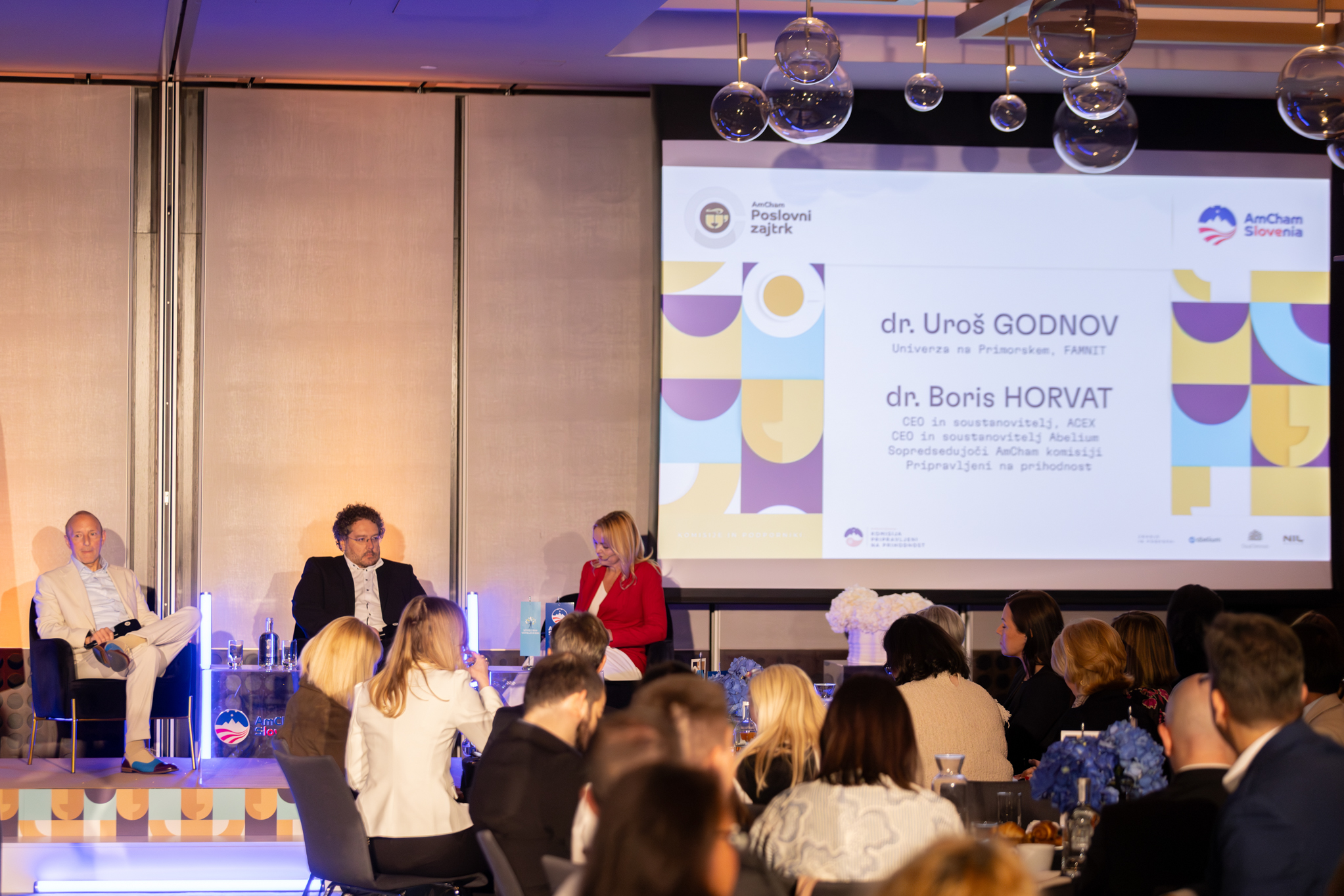
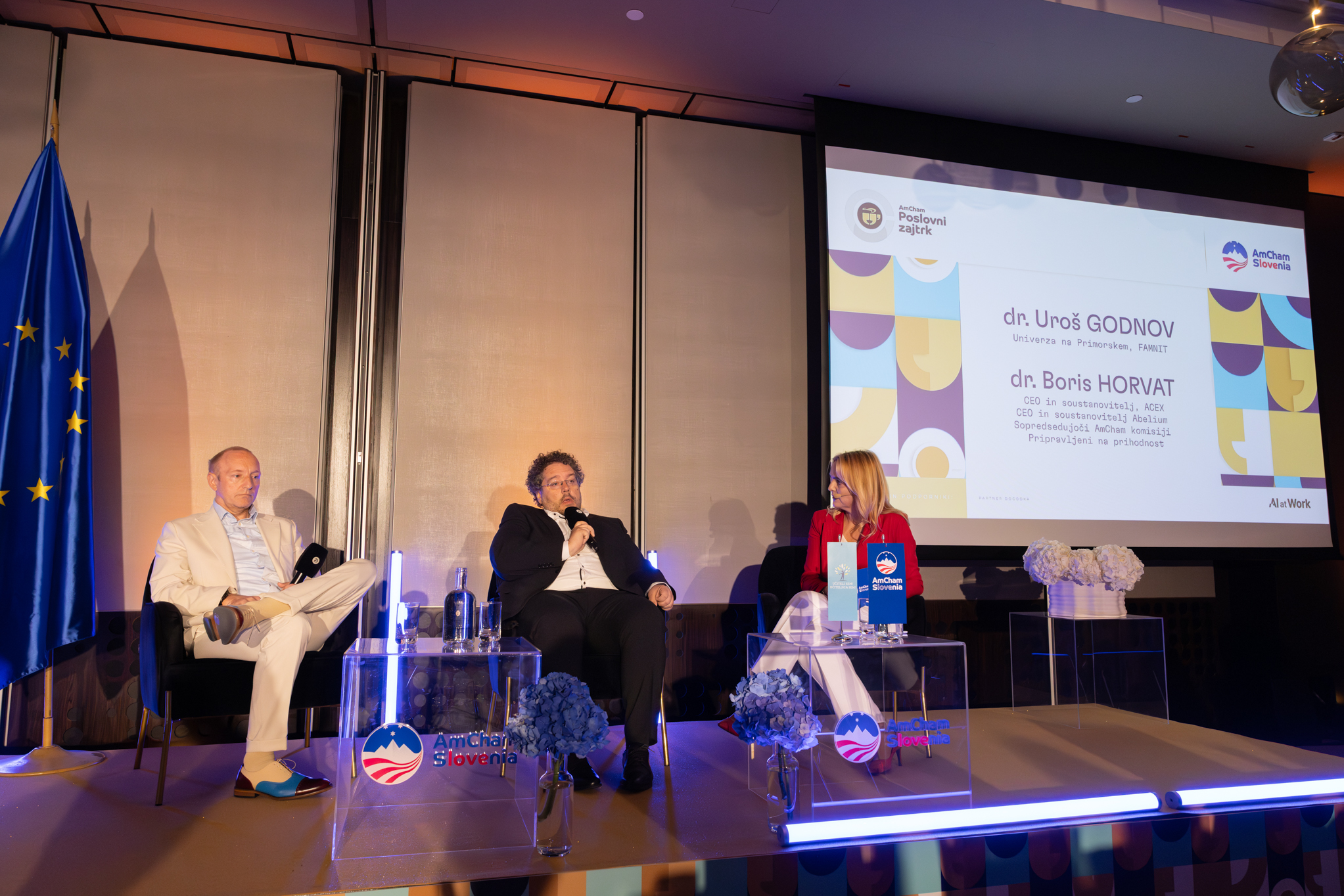
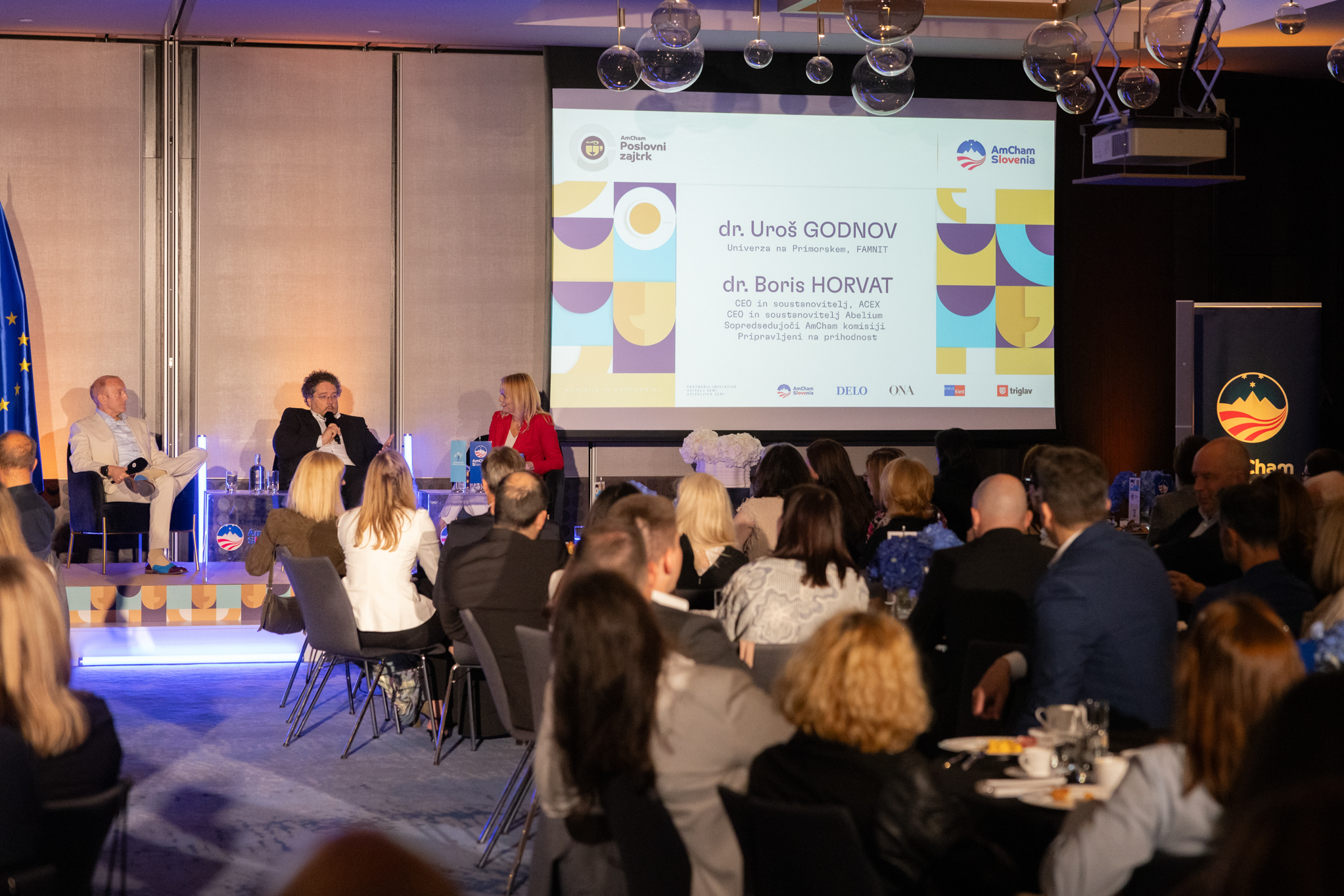
Uroš Godnov, University of Primorska, FAMNIT, spoke about how quickly artificial intelligence is transforming higher education and the labor market. He warned that universities are increasingly losing touch with the speed of technological development, as changes are no longer happening year by year, but week by week.
“The development is moving so fast that I can no longer predict things in advance,” he emphasized, adding that this is why he adapts his courses from semester to semester.
Today, businesses no longer need graduates with theoretical knowledge alone, but people who know how to use new tools in practice. “Universities have always positioned themselves as institutions that must give students something more,” he said, while also stressing that companies primarily need students who are prepared for real-world challenges. One of the key steps, in his opinion, is providing students with access to powerful tools, real projects, and modern workflows already during their studies.
“Those who remain indecisive will become uncompetitive.”
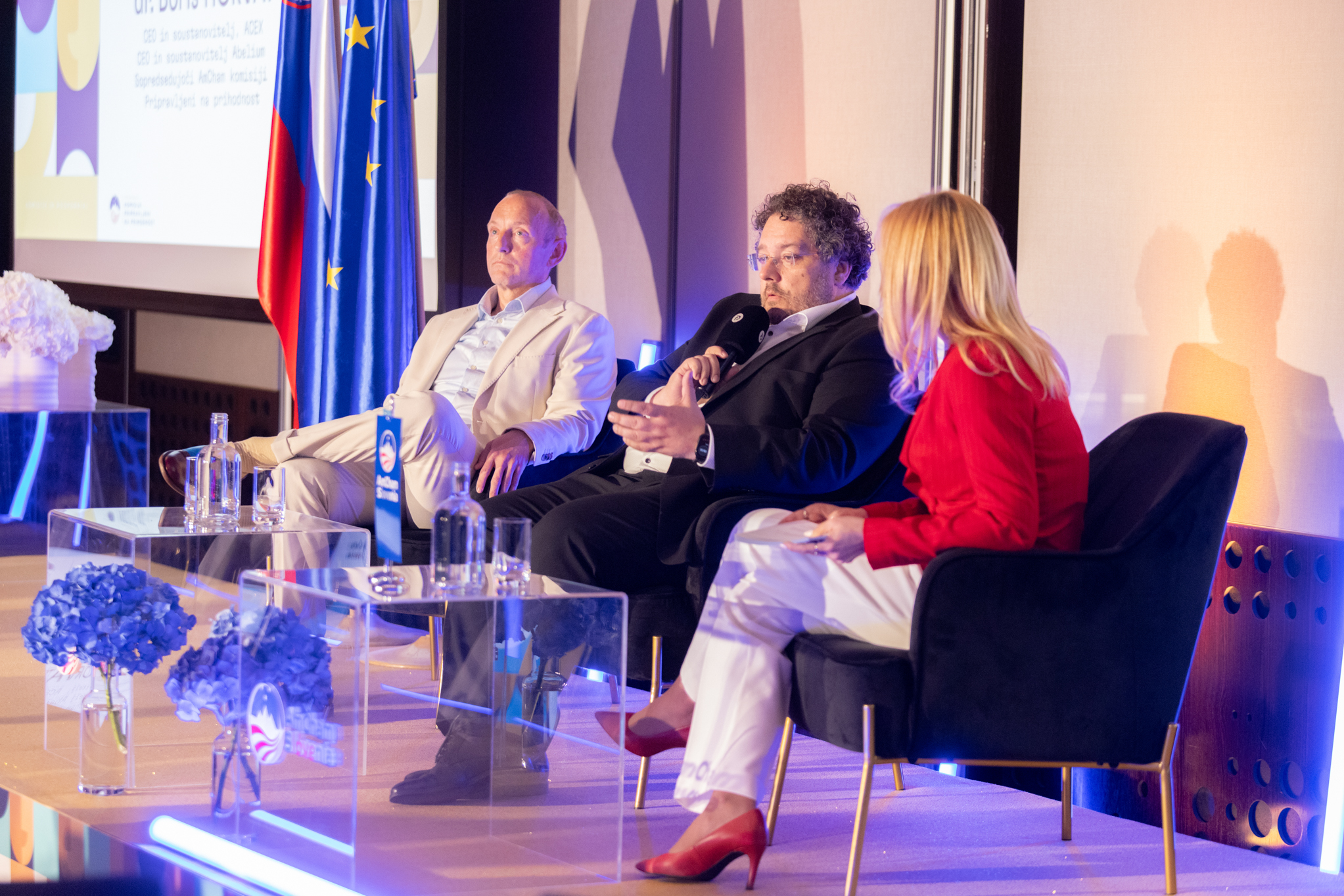
Boris Horvat, Co-Chair of the AmCham Ready4DFuture Committee; CEO and Co-Founder of ACEX; CEO and Co-Founder of Abelium, warned that Europe is already lagging behind the United States and China in the field of artificial intelligence, while Slovenia is even behind the European average.
“With outdated, slow, gradual approaches to adaptation, we will not achieve much,” he emphasized, adding that “formal education is not keeping up.”
Despite the delay, Slovenia still has an opportunity to leap forward: “We have an excellent opportunity to skip over some missed opportunities. But we must start now. […] Talents will not wait in environments that do not change — they will go where they are supported,” while “those who remain indecisive will become uncompetitive.”
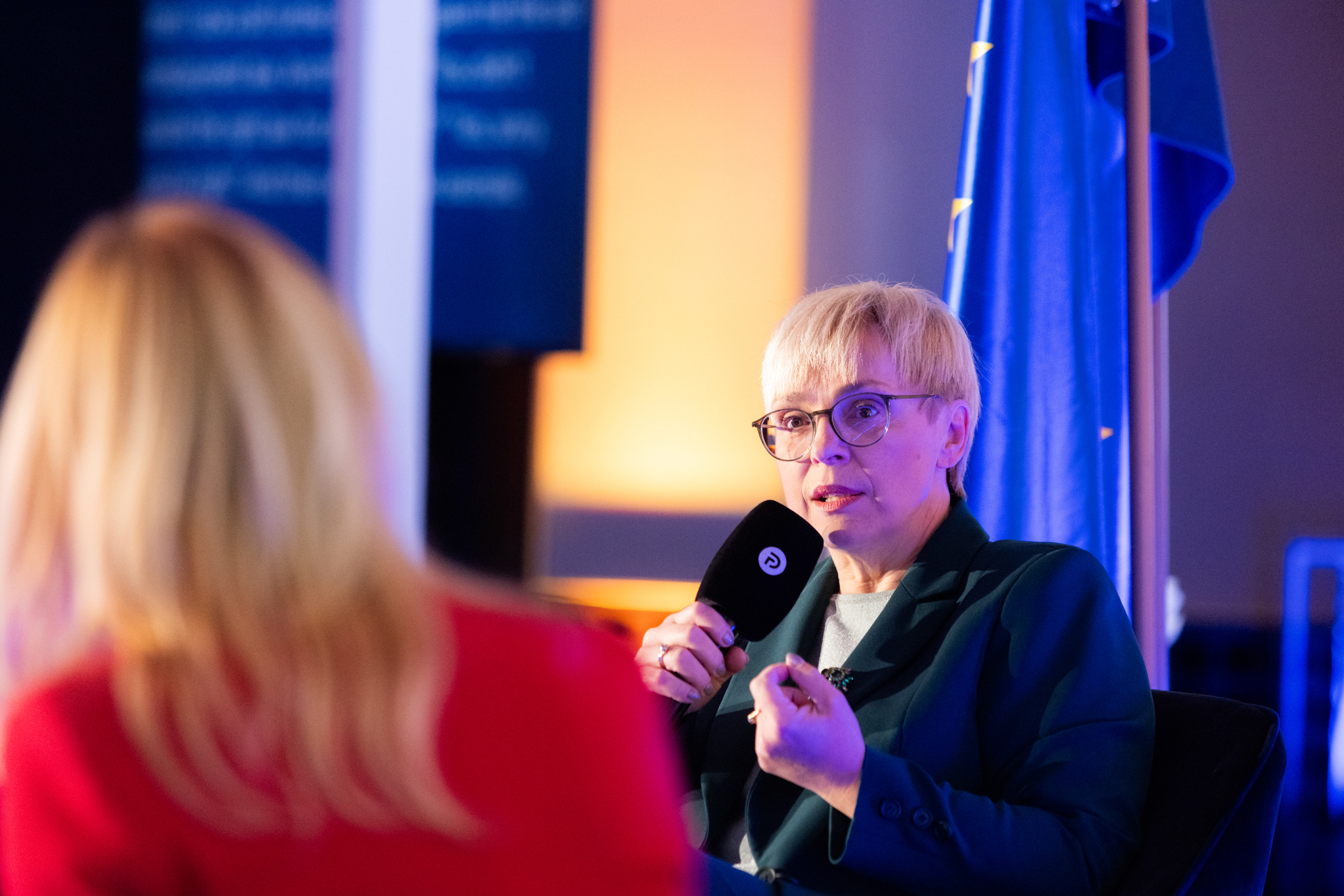
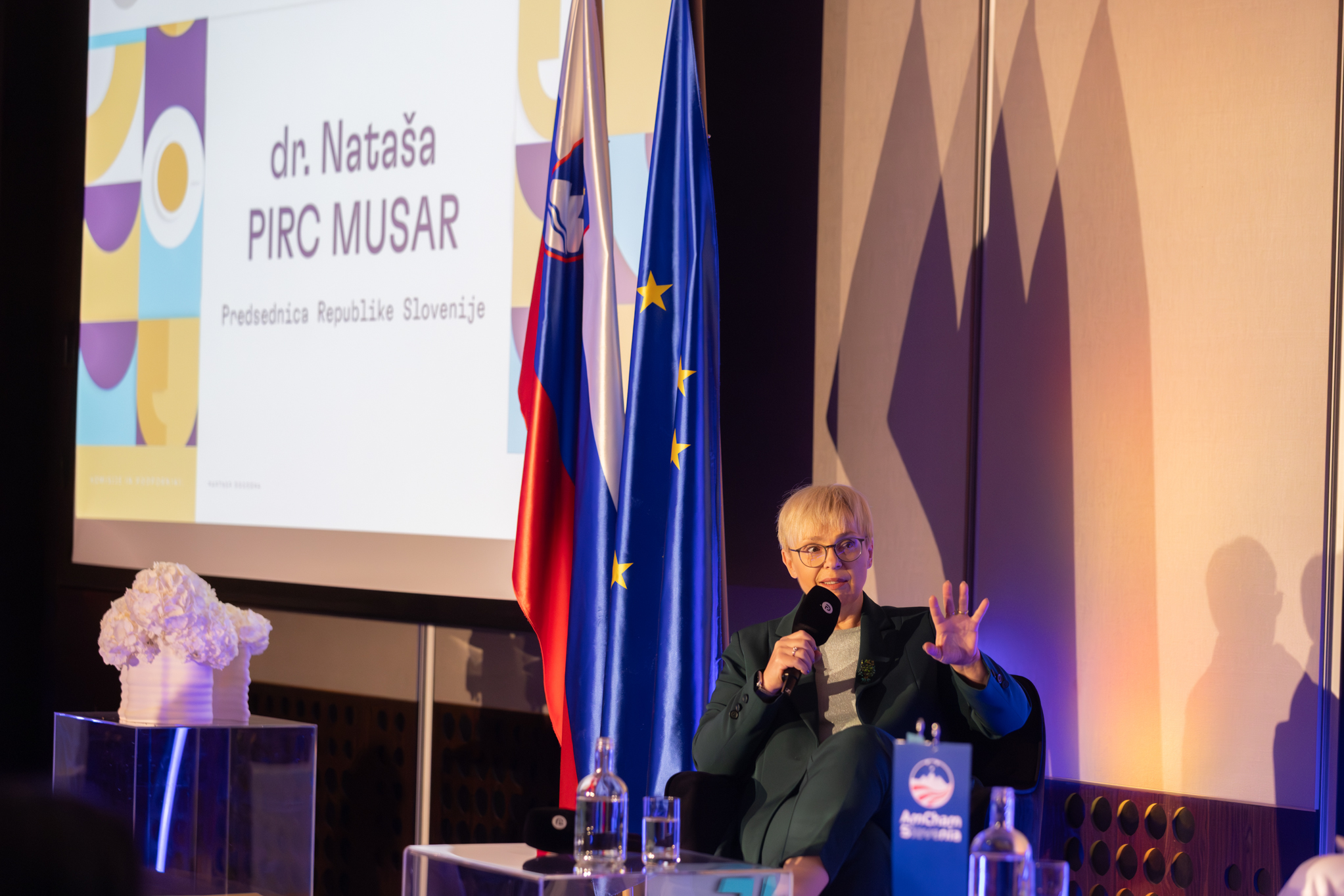
President of the Republic of Slovenia Dr. Nataša Pirc Musar particularly highlighted that Slovenia still does not have systematically regulated compulsory computer science education in primary schools, which she believes represents a major challenge for the future of younger generations and society’s development:
“Please stop talking only about digital literacy and start talking about computer literacy, because it is much more than that. We do not have this subject in primary schools, where students should gain basic data literacy skills. […] In this area, time has truly overtaken us. I believe we are the only country in the European Union without this subject in primary schools.”
“Over the next 6 months, take one AI tool and integrate it into your work.”
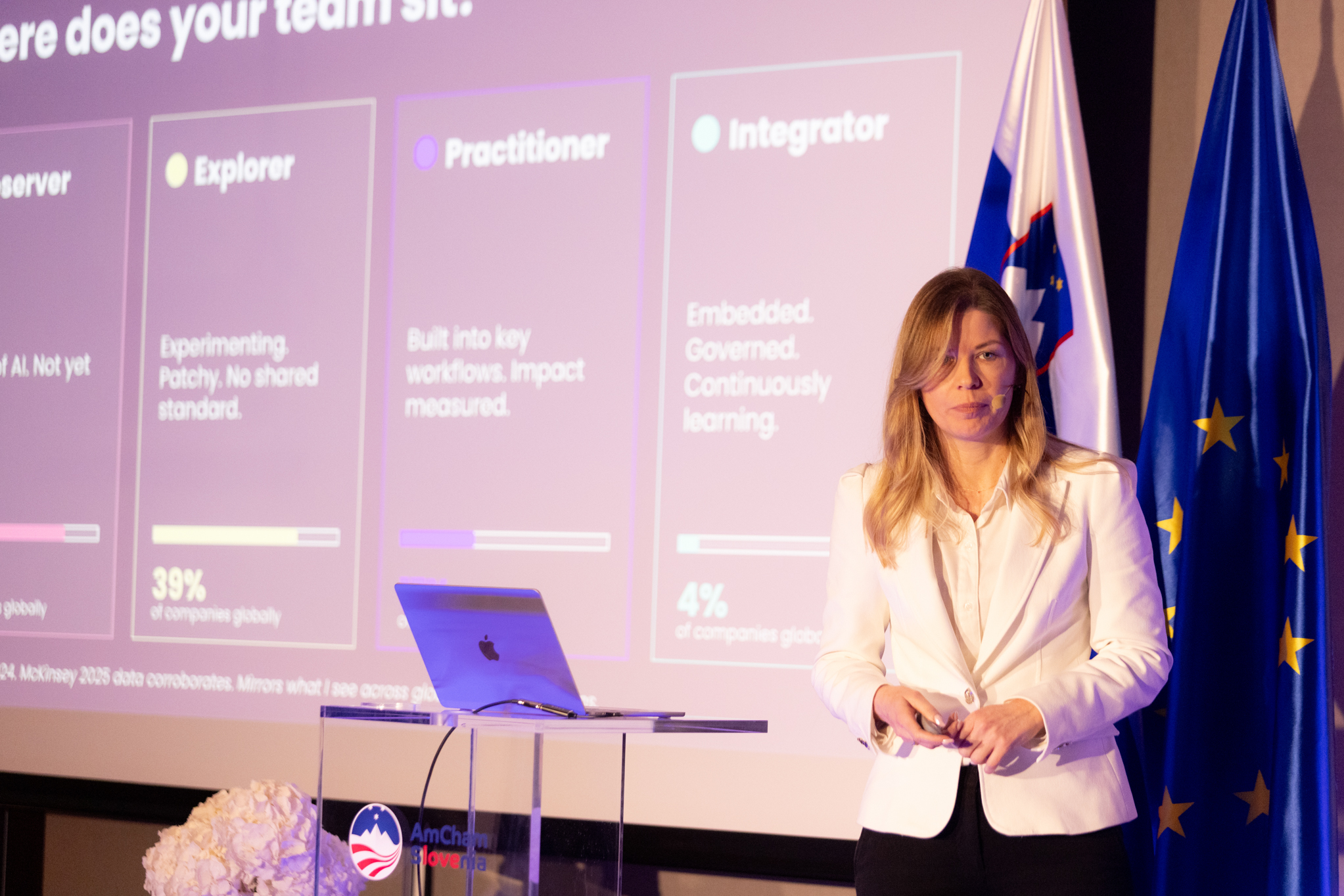
Beatrix Mészáros, Practical AI & Digital Marketing Trainer, presented the four stages of AI maturity in organizations and emphasized that most companies are still in the early stages of AI adoption. Companies that successfully integrate artificial intelligence do not necessarily stand out because of the largest budgets, but because of leadership mindset.
She highlighted three key things the most advanced companies do: leaders use AI themselves and lead by example, companies redesign workflows instead of simply adding AI on top of existing processes, and they also measure the impact of AI adoption with concrete metrics.
“The worst thing is when we stop talking to each other.”
President Nataša Pirc Musar, PhD, also addressed the future of democracy, trust, and cooperation in society. She warned about the erosion of democracy worldwide and pointed out that young people today are missing clear decisions and a vision for the future, which creates space for extremism.
She connected the question of cooperation to healthcare reform, stressing that meaningful reform will not be possible without political collaboration:
“Can you imagine solving the healthcare system without cooperation between the government and the opposition?”
She emphasized that healthcare goes beyond political mandates and ideological divisions because “healthcare gives people dignity and enables quality of life.”
What did artificial intelligence have to say about the future?
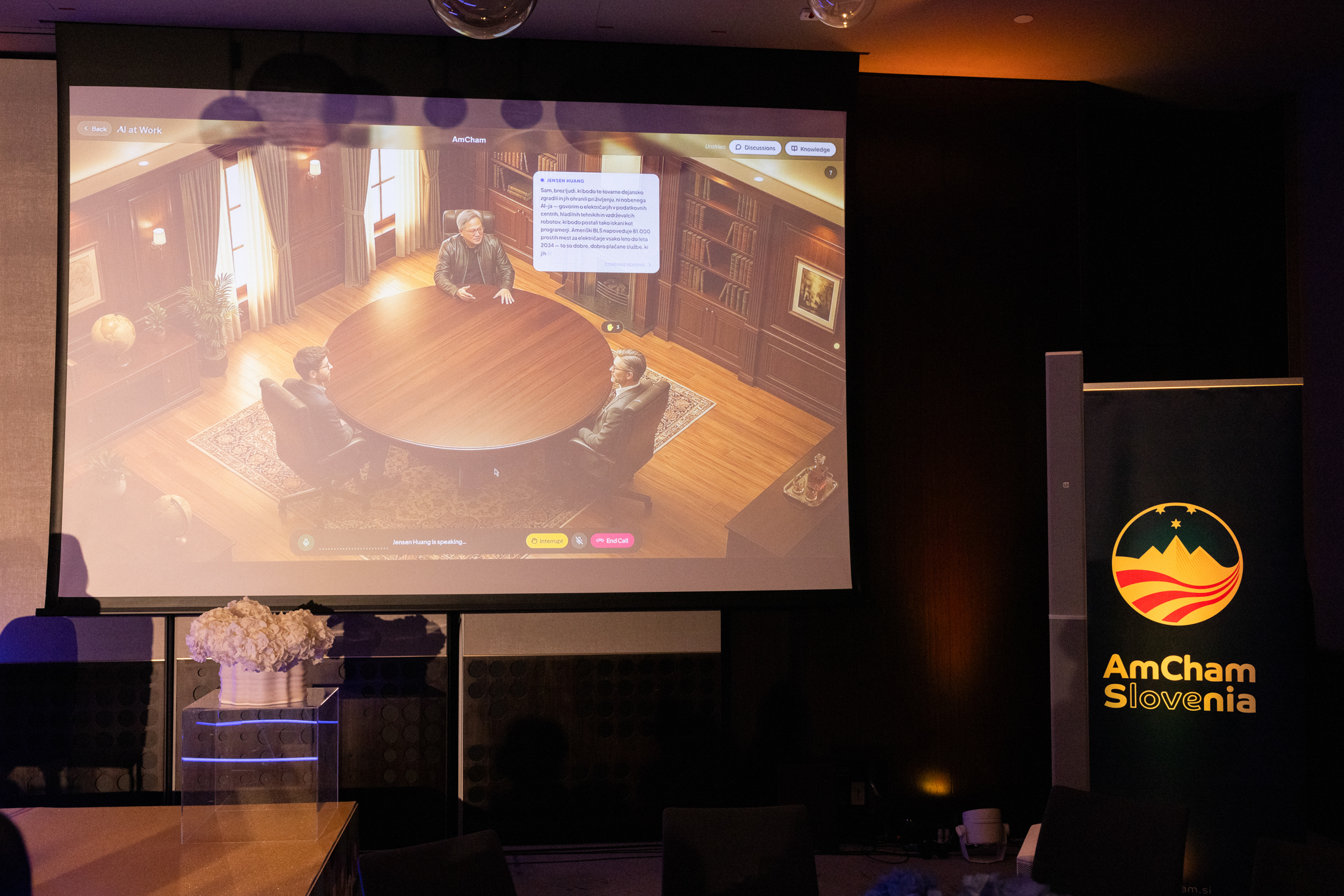
As expected for an event focused on artificial intelligence, the AmCham Business Breakfast also featured the AI tool Boardroom within the AIatWork platform, which addressed contemporary questions through the perspective of some of history’s greatest thinkers as well as leading names from today’s technological world.
Participants were able to observe how Plato, Thomas Jefferson, and Jean-Jacques Rousseau — through AI interpretation — would answer the question: “What is democracy?”
Jefferson emphasized that democracy cannot survive without an educated population. Plato warned about the dangers of politics that merely follows the wishes of the masses, while Rousseau highlighted the importance of community, cooperation, and shared responsibility for the future of society.
The AI version of Niklas Zennström suggested that the future does not belong only to AI developers, but above all to people who know how to connect technology with the real world:
“Do not wait for reskilling.”
“The most sought-after people will not be model developers, but people who understand both business and technology.”