

At the April meeting of the AmCham Future of Work and Education Committee, we opened one of the most relevant topics of the coming years: pay transparency and preparation for the implementation of the upcoming EU directive.
The meeting was both content-rich and interactive, going beyond legal obligations to address what pay transparency truly means for organizations—especially within companies themselves.
We were joined by two outstanding speakers: Ms. Tatjana Strojan from the Ministry of Labour, Family, Social Affairs and Equal Opportunities and Larisa Grizilo from THERA svet d.o.o., who approached the topic from two key perspectives—regulatory and practical.
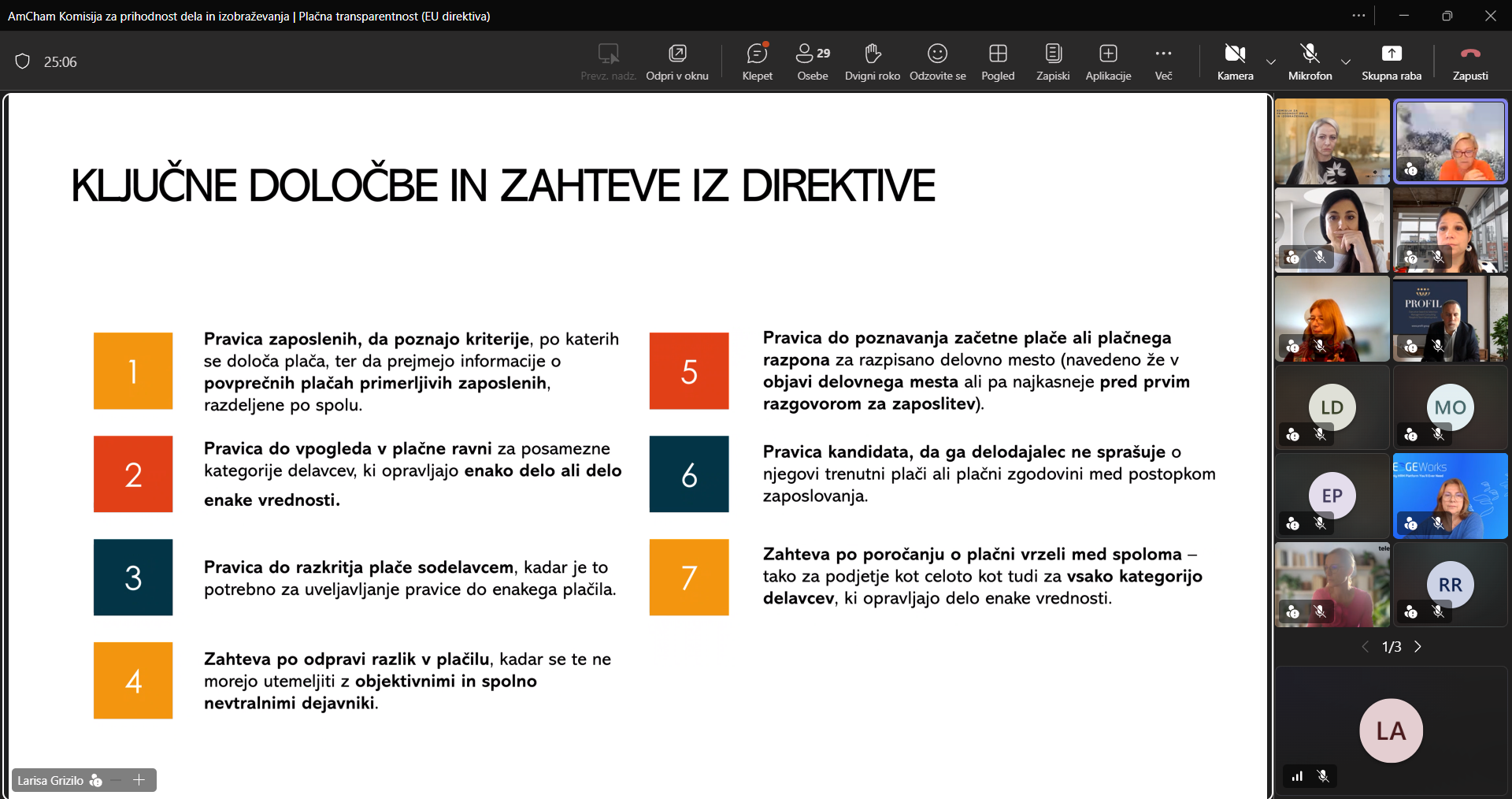
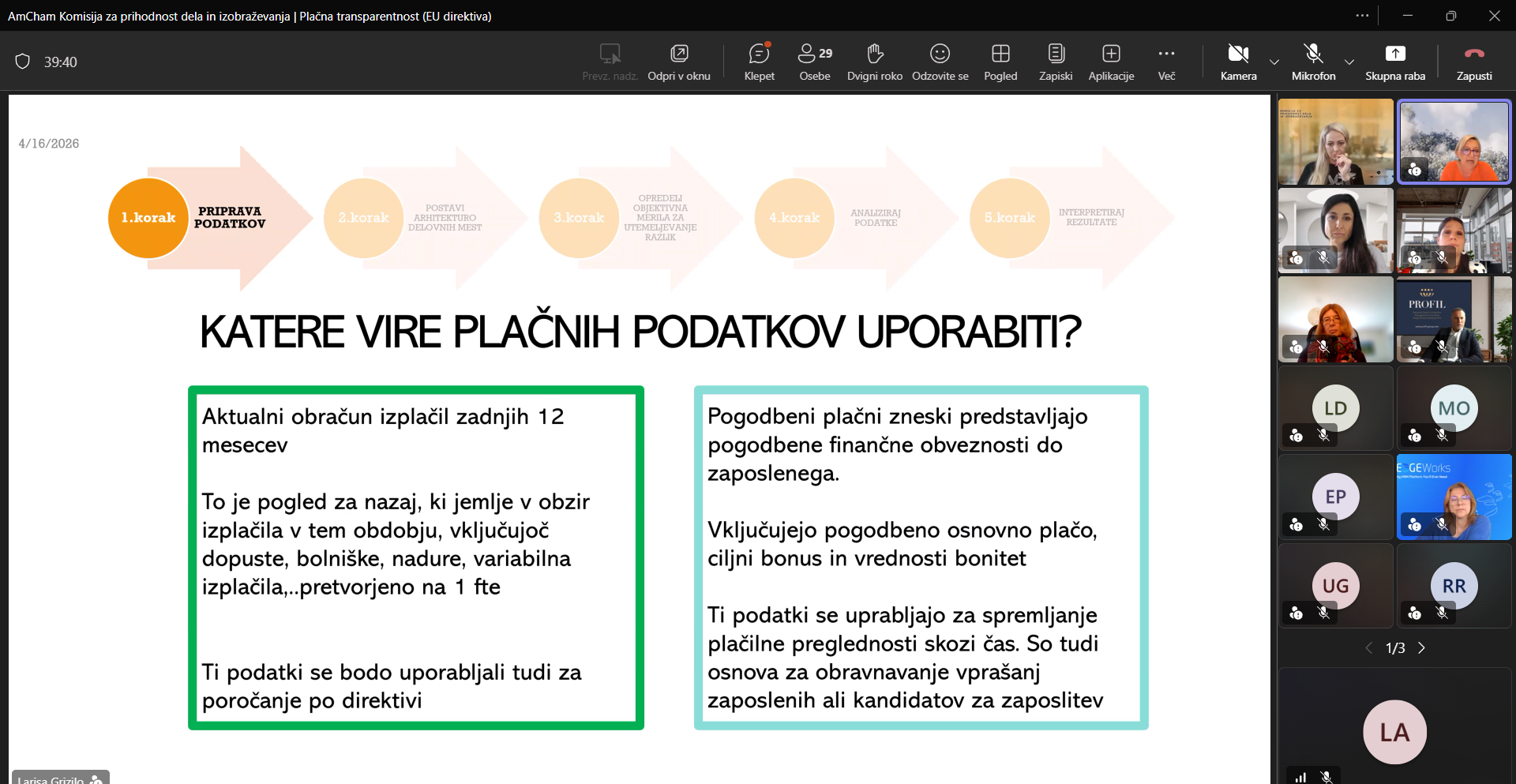
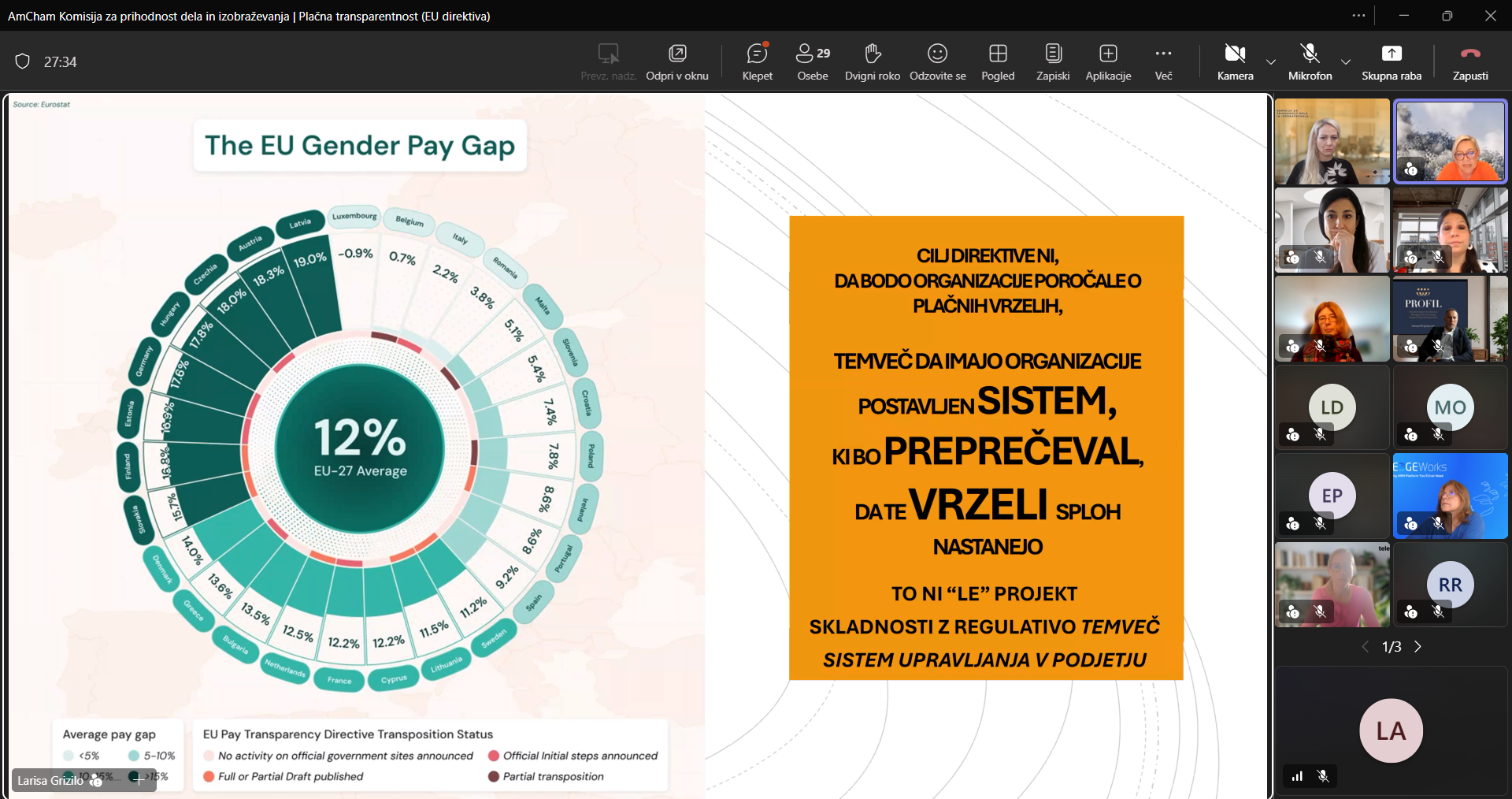
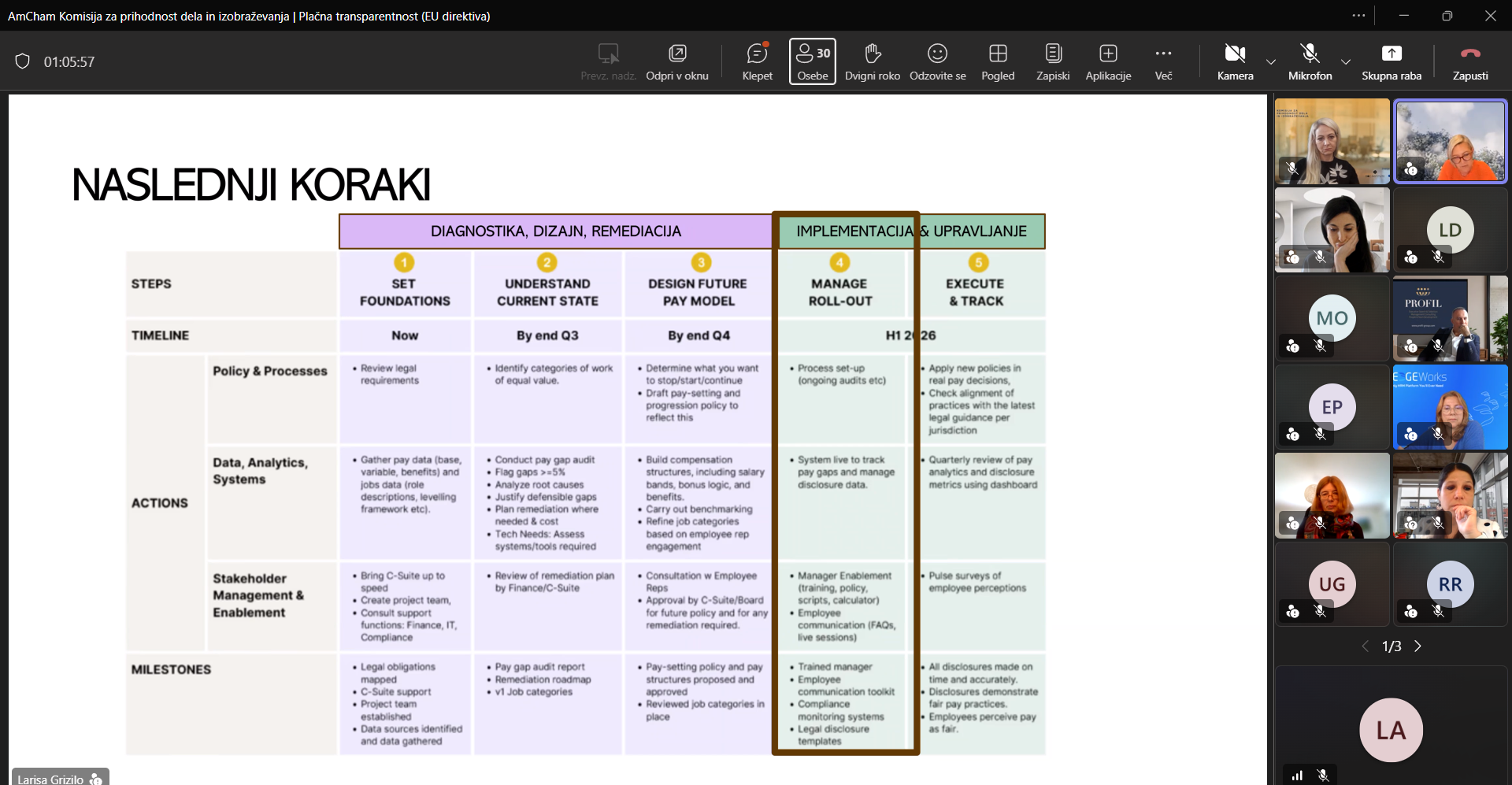
Larisa Grizilo emphasized that the directive’s goal “is not merely to report on pay gaps, but to establish a system that prevents them from arising in the first place.” She highlighted concrete steps organizations should begin addressing today: from job evaluation and the development of job architecture to setting salary bands, defining compensation policies, and training managers for a consistent and competent dialogue with employees.
She also stressed that employees will need to clearly understand the criteria determining their pay, how roles are structured, what drives career progression, and how job evaluation differs from individual performance. This, she noted, is where the true power of pay transparency begins—with greater trust, clearer understanding of rules, and more consistent leadership.
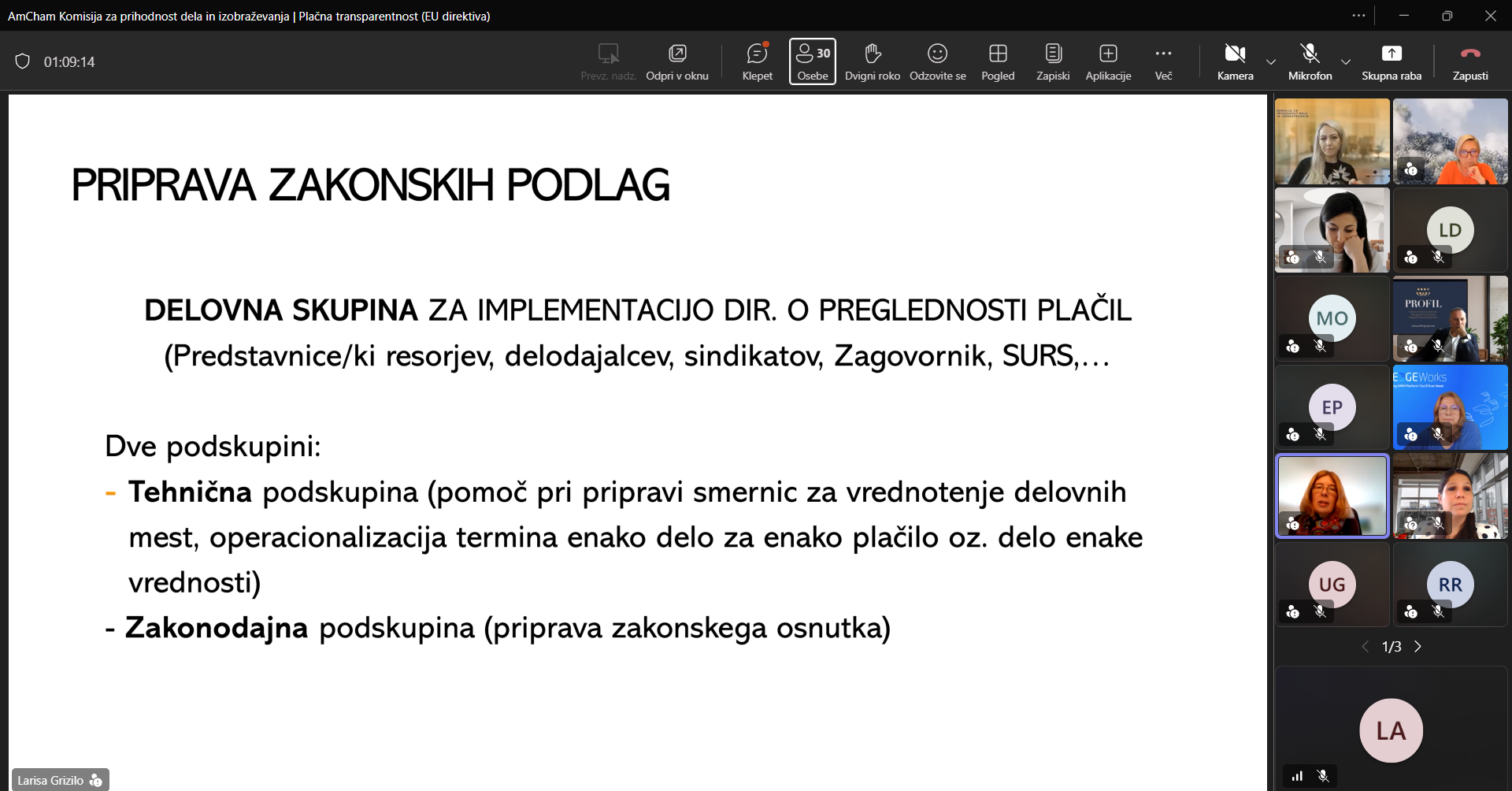
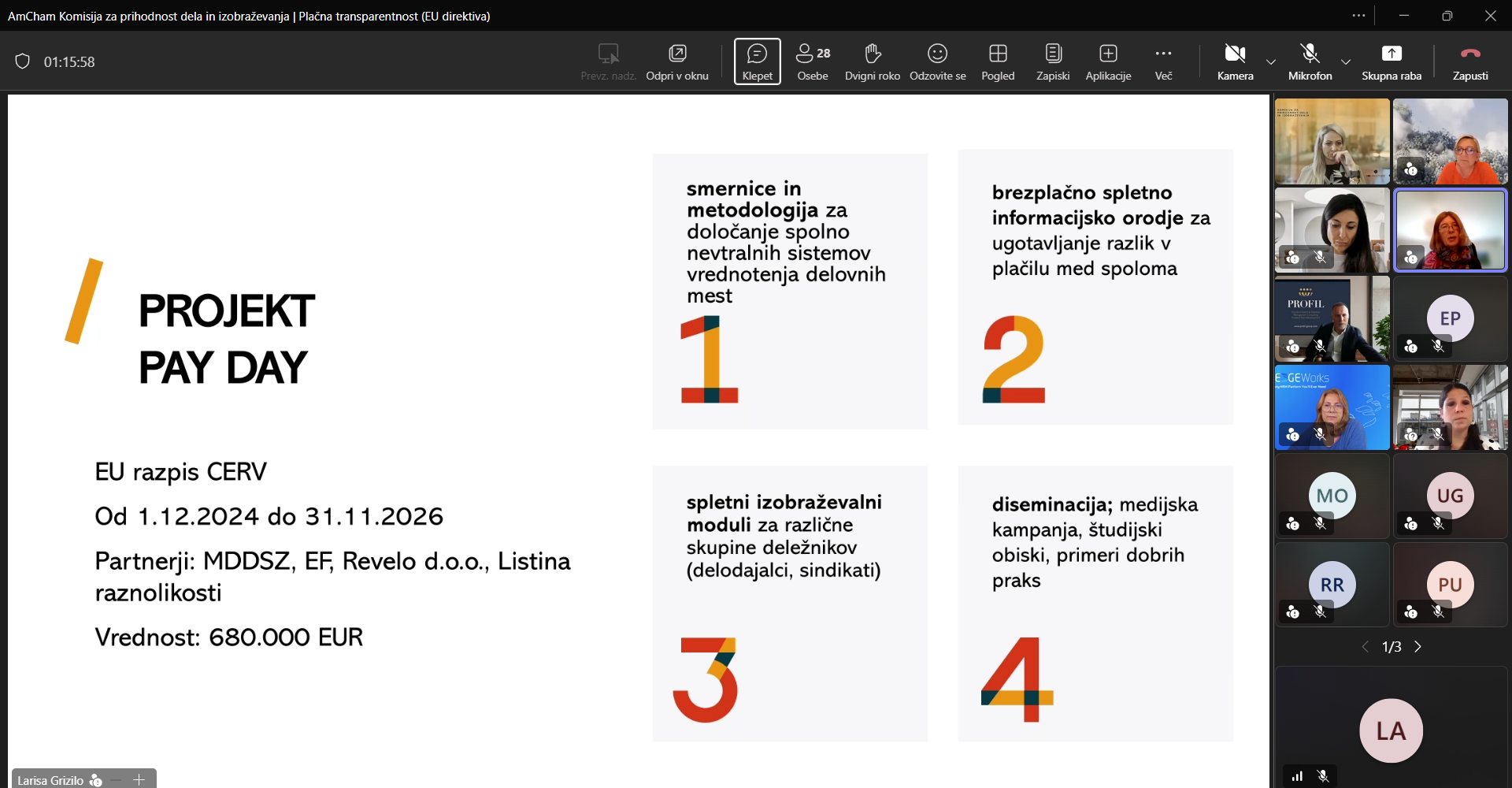
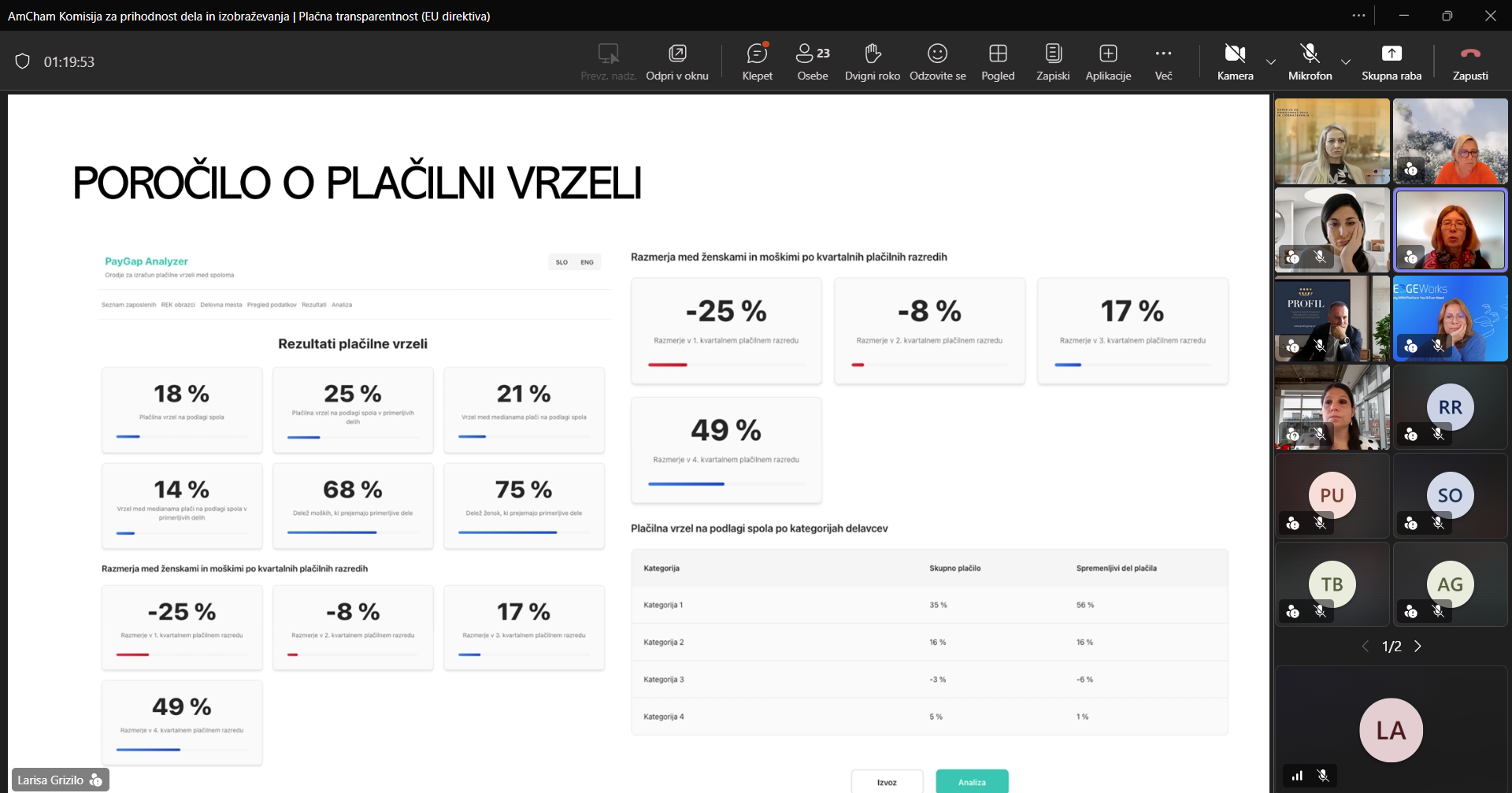
Ms. Tatjana Strojan also presented the government’s perspective on transposing the directive into Slovenian law. She explained that legislative preparations are underway, alongside the development of practical technical support for employers. This includes a methodology for job evaluation and a free online tool for calculating the gender pay gap, both designed to help employers implement the new requirements in practice.