

Capital needs opportunities. Innovation requires a willingness to take risks. Both, however, depend on trust.
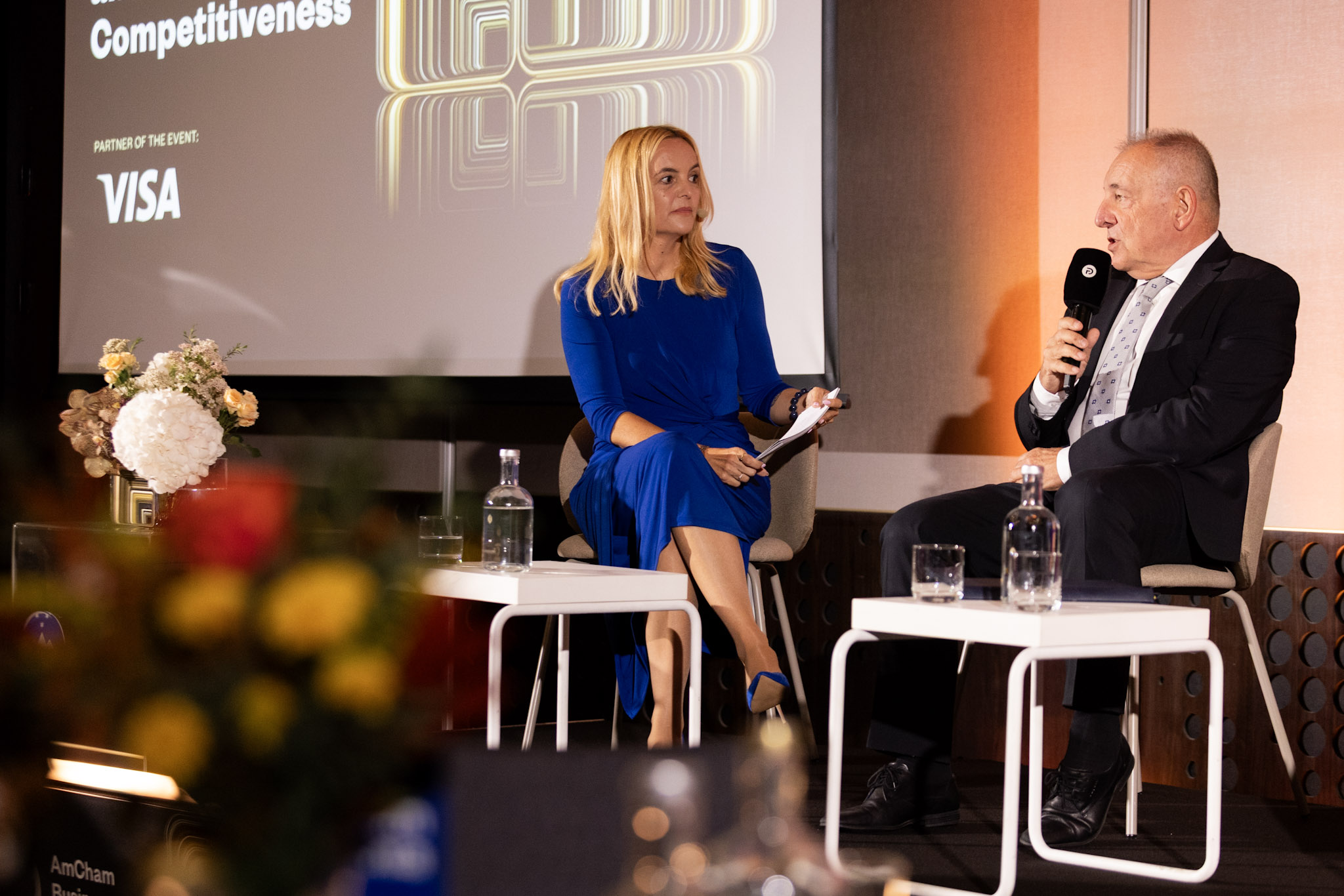
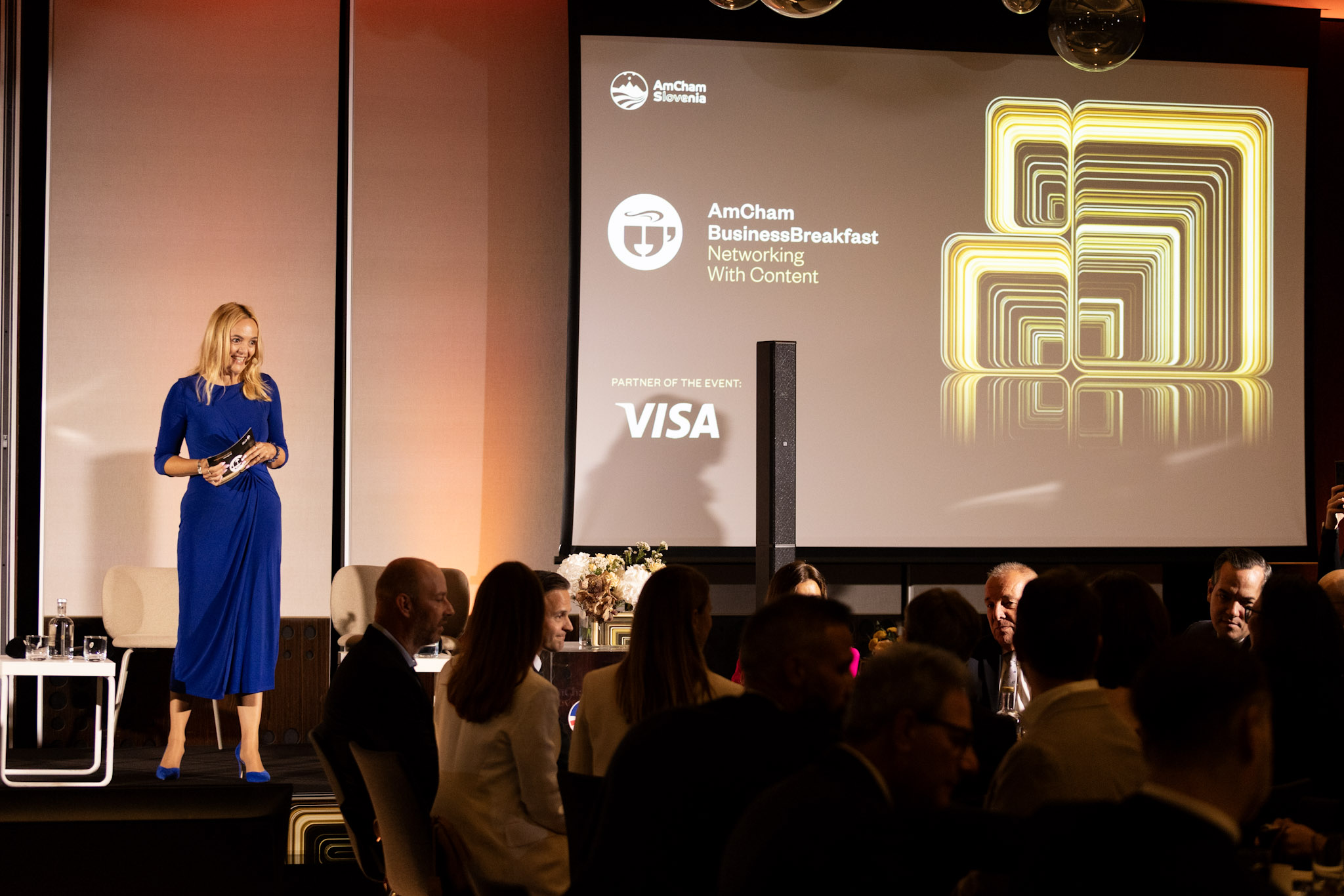
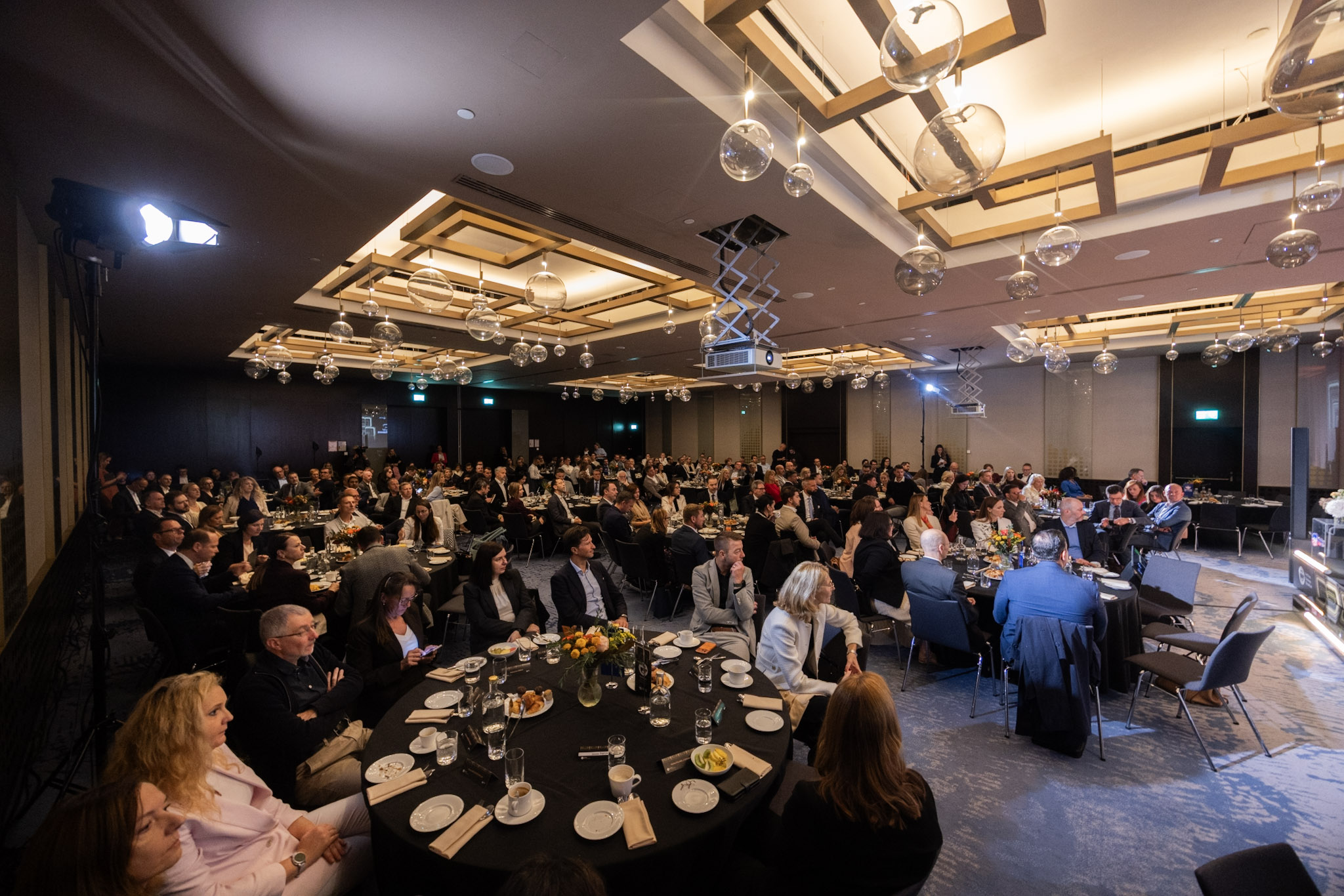
How do we build a financial ecosystem that is competitive, secure, innovative, and attractive for investment? This was the central question of the AmCham Business Breakfast titled Who Pays the Price of Risk? Capital, Competitiveness and Financial Markets. Organized by the AmCham Slovenia Finance Committee, the event brought together representatives of the financial sector, business, and government.
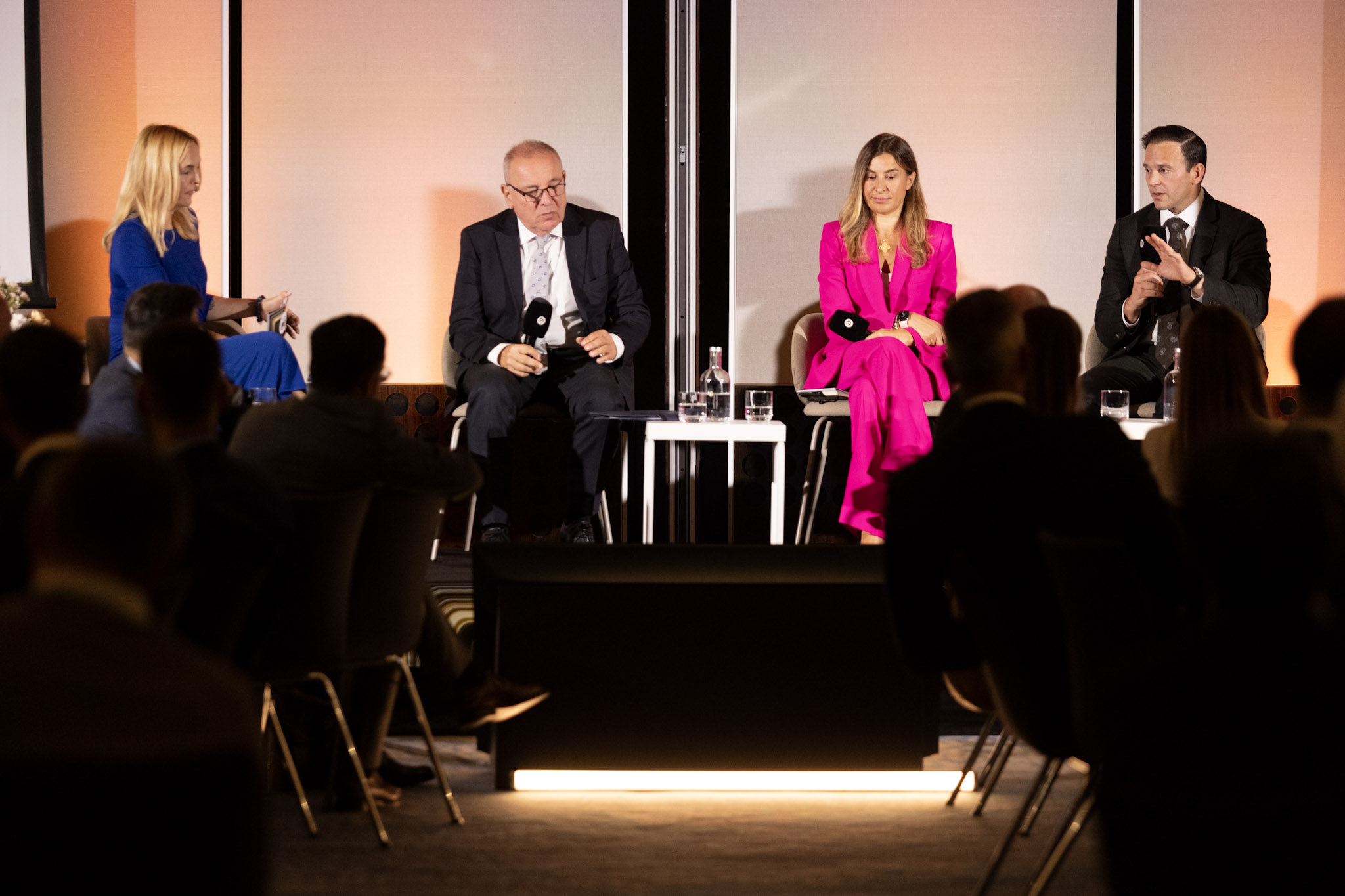
Discussing the future of finance, investment, and competitiveness with Ajša Vodnik, MSc, General Manager of AmCham Slovenia, were David Capezza, Chief Risk Officer, Visa Europe; Paola Papanicolaou, Head of International Banks Division at Intesa Sanpaolo; and Andrej Šircelj, MSc, Minister of Finance of the Republic of Slovenia. The discussion was also joined by Mira K. Veljić, Director of ZDU GIZ; Benjamin Jošar, President of the Management Board of ZDU GIZ and CEO of Triglav Investments; and Stanislava Zadravec Caprirolo, MSc, Director of the Bank Association of Slovenia.
From capital markets and pension savings to artificial intelligence, digital payments, and regulation, the conversation repeatedly returned to the same core issue: trust.
Risk as an integral part of innovation
David Capezza placed the question of risk at the centre of the discussion. Innovation, investment, and growth are always linked to a certain degree of risk. The key, therefore, is not how to eliminate risk, but how to understand and manage it responsibly: “If we want to foster innovation, investment, and growth, we must also be prepared to accept risk.”
In his view, the future of financial services will increasingly be shaped by data, predictive analytics, artificial intelligence, and new payment solutions. Yet speed of development alone will not be enough. New technologies will need to be secure, reliable, and worthy of trust. Capezza highlighted Slovenia as an environment that has already demonstrated its ability to introduce new technologies and payment methods quickly. A smaller market can in fact be an advantage if it enables faster deployment of solutions that can later be scaled more broadly.
With the rapid development of artificial intelligence, the question of how to manage the risks of technologies that evolve faster than traditional decision-making and regulatory processes is becoming ever more important. User trust will significantly influence how quickly new financial services and solutions become part of everyday life.
Europe has capital. The challenge is where to direct it.
One of the central themes of the discussion was the question of European capital. Speakers emphasised that the greatest problem is not a lack of capital, but the fact that a large share of savings does not reach productive investments, innovation, and growth-oriented companies.
Mira K. Veljić pointed out that Europe will need enormous amounts of capital for the green and digital transition, defence, infrastructure, artificial intelligence, and the growth of European companies. Banks will continue to play an important role in financing, but their balance sheets alone will not be able to cover all needs. This is why stronger capital markets and more effective channeling of European savings into long-term productive investments are essential.
This issue is particularly relevant for Slovenia, where a significant portion of household savings remains in bank deposits. Veljić therefore raised the question of how tax policy, the pension system, and other measures can encourage greater investment in capital markets, and what role investment and pension funds can play in this process.
Paola Papanicolaou placed the discussion in a broader European context. European households hold approximately €10 trillion in deposits, while Europe faces an annual investment gap estimated at €700–800 billion.
Europe therefore needs a stronger link between savings, capital markets, and investments. This is not a choice between banks and capital markets. We need both. Banks remain an important source of financing for companies, infrastructure, and the economic transition, while more developed capital markets enable greater volumes of financing, risk sharing, and new opportunities for growth. But capital only moves when there is trust. “Trust is the foundation of the financial system,” Papanicolaou emphasised.
Companies, banks, and investors need clear rules of the game and stable conditions that enable long-term planning and investment decisions. An important part of this is also financial literacy — not only of individuals, but also of companies seeking to grow and operate across borders.
Regulation must build trust, not bureaucracy
An important part of the conversation focused on how to ensure the security of the financial system without stifling innovation. Europe needs clear and as harmonised as possible rules that provide safety while allowing companies to develop new business models, adopt technology, and expand into new markets. Common rules are also important for companies operating in multiple countries, as they reduce complexity and facilitate business expansion.
Stanislava Zadravec Caprirolo, MSc, Director of the Bank Association of Slovenia, also highlighted the growing regulatory requirements. Banks today simultaneously face geopolitical risks, cyber threats, digital transformation, and financial crime, while still needing to provide accessible financing to the economy and the population.
Regulatory complexity, capital requirements, reporting obligations, and frequent changes in rules also affect the cost and availability of financing. This is why the question in the event’s title quickly moves from theory into practice: who ultimately pays these costs?
Slovenia needs stability and predictability
Andrej Šircelj, MSc, emphasised the importance of developing the capital market, reducing administrative burdens, and strengthening financial literacy, particularly among young people. For long-term investment decisions, he said, the stability of the system is crucial: “The system must be stable.”
Frequent changes in rules and an unpredictable business environment hinder long-term planning and influence the decisions of companies and investors. Šircelj announced further changes in the areas of the capital market, simplification of procedures, and the tax system, and highlighted the need to reduce the tax burden on labour.
Survey results among event participants also showed that the business community identifies high taxation of labour and bureaucracy as key challenges to Slovenia’s competitiveness.
For many years, the AmCham Slovenia Finance Committee has highlighted among its key priorities a predictable and development-oriented tax environment, a development tax cap, the expansion of personal income tax brackets, the development of the capital market, and measures that enable domestic capital to flow more effectively into the development of the economy.
Among the top 20 most competitive countries
Benjamin Jošar steered the discussion on competitiveness toward a very concrete goal. As one of the key structural changes, he highlighted the predictability of regulation and the overall business environment, alongside the importance of market-oriented regulation and a level playing field.
Since competitiveness cannot be improved by a single tax or regulatory measure, he proposed a more ambitious common objective: that within the next five years Slovenia ranks among the top 20 most competitive countries on the IMD World Competitiveness Ranking.
Such a goal, in his view, could transcend individual political terms, bring together key stakeholders, and provide clearer direction for decisions in the areas of taxation, regulation, investment, and the development of the business environment.
Beyond capital, regulation, and technology, people remain the most important factor. Talent, its retention, and Slovenia’s ability to attract top professionals and corporate development functions were highlighted by the speakers as an essential part of future competitiveness.
As Papanicolaou emphasised, technology remains primarily a tool, while people are the most important capital of companies. In a rapidly changing environment, it is therefore not only salaries and taxes that matter, but also opportunities for development, learning, and advancement.
Slovenia has knowledge, a developed financial infrastructure, and the ability to introduce new solutions quickly. To convert this potential into more investment, innovation, and high-value-added jobs, we primarily need an environment in which companies, investors, and individuals can plan for the long term.