


AmCham Business Breakfast
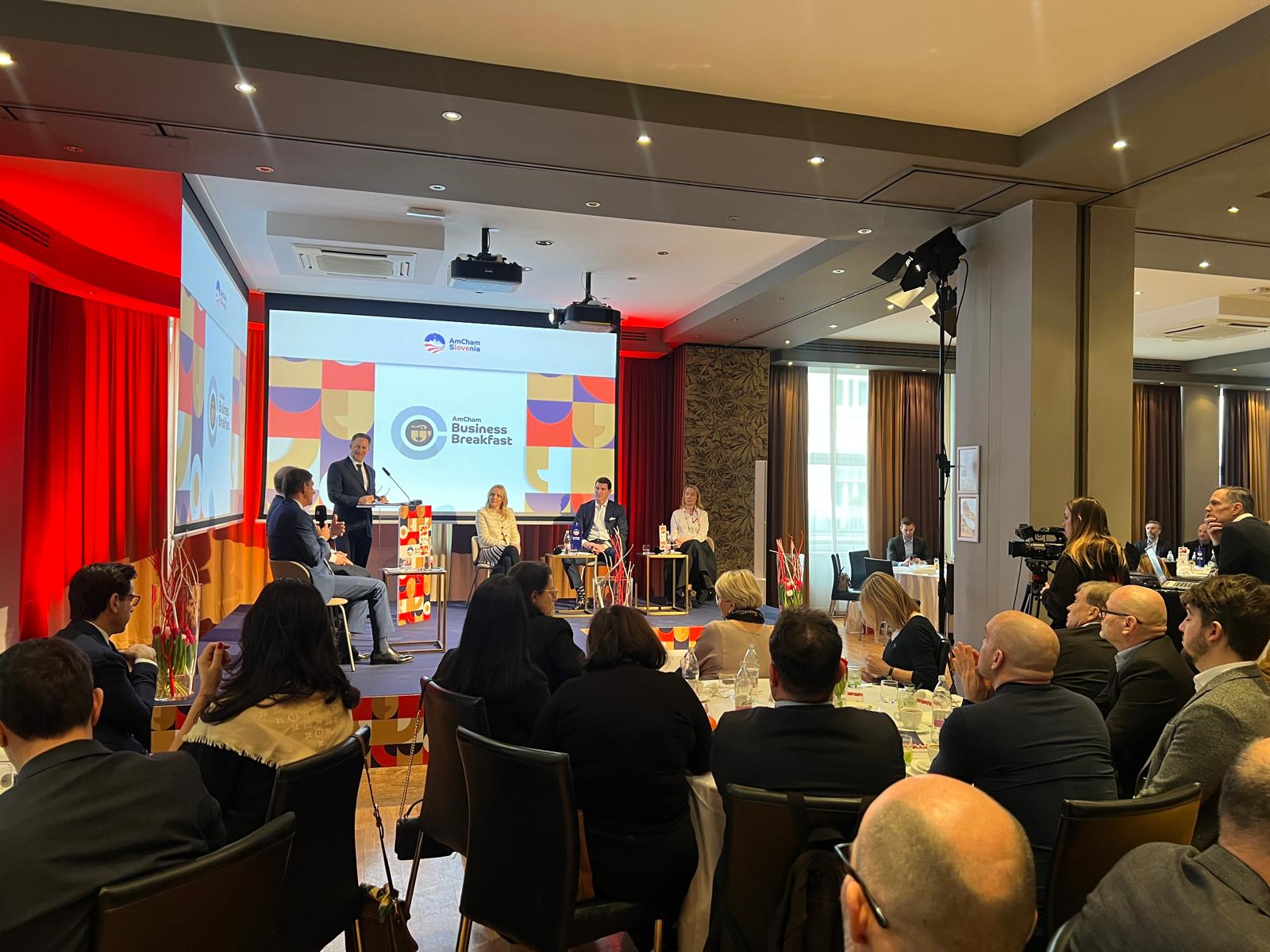
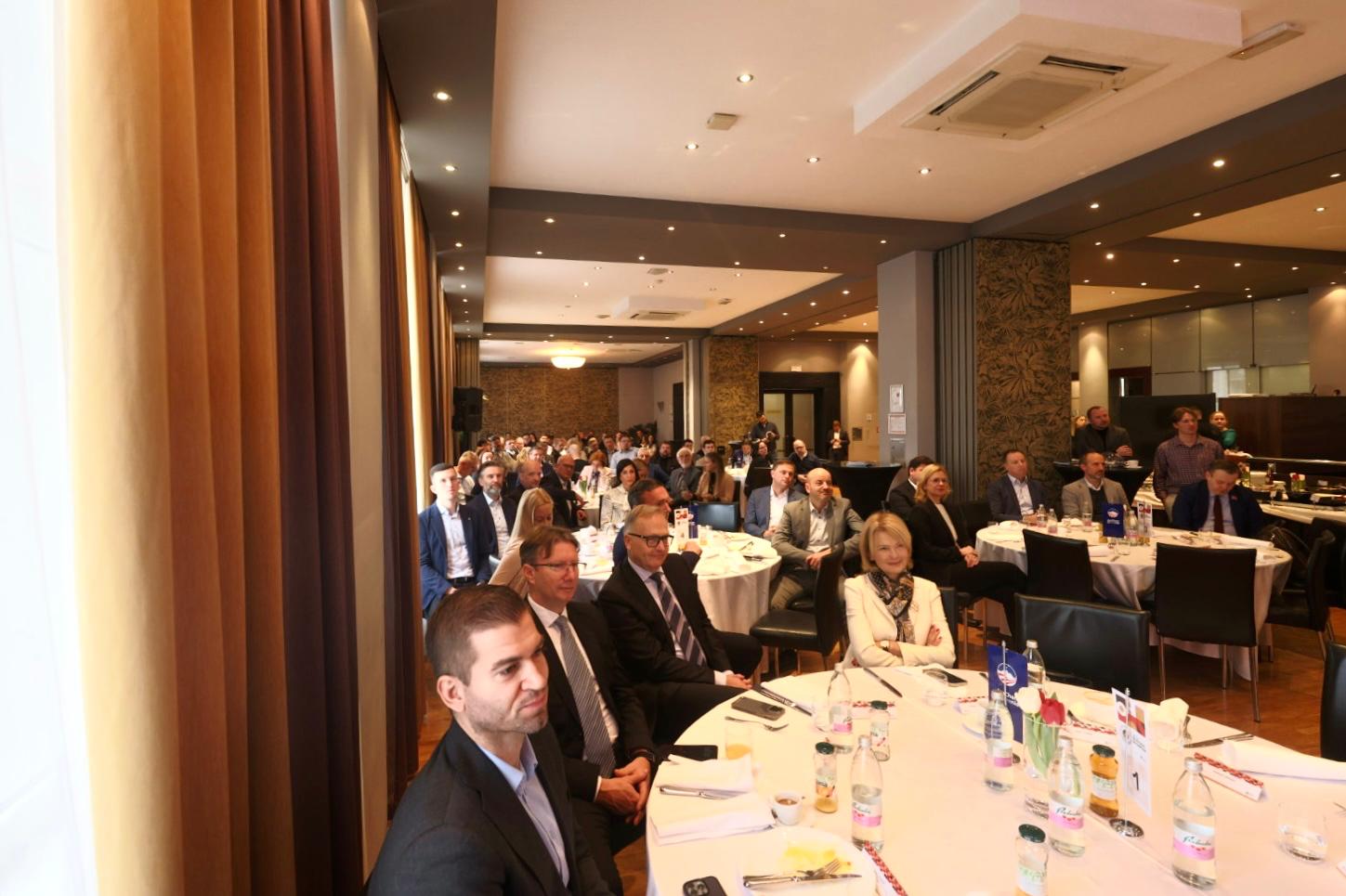
At its first AmCham Business Breakfast of the year, AmCham Slovenia opened a strategic dialogue on the future of transatlantic relations in the symbolic year marking the 250th anniversary of the United States. The event, “USA 250: Impact, Dominance or Partnership?”, brought together representatives of politics, diplomacy, and business to reflect on how to preserve a stable, balanced, and predictable partnership between Europe and the United States in a changing global environment. Speakers agreed that the United States should not be reduced to current politics or individual political figures – at its core, the transatlantic relationship is built by people, companies, and long-term partnerships.
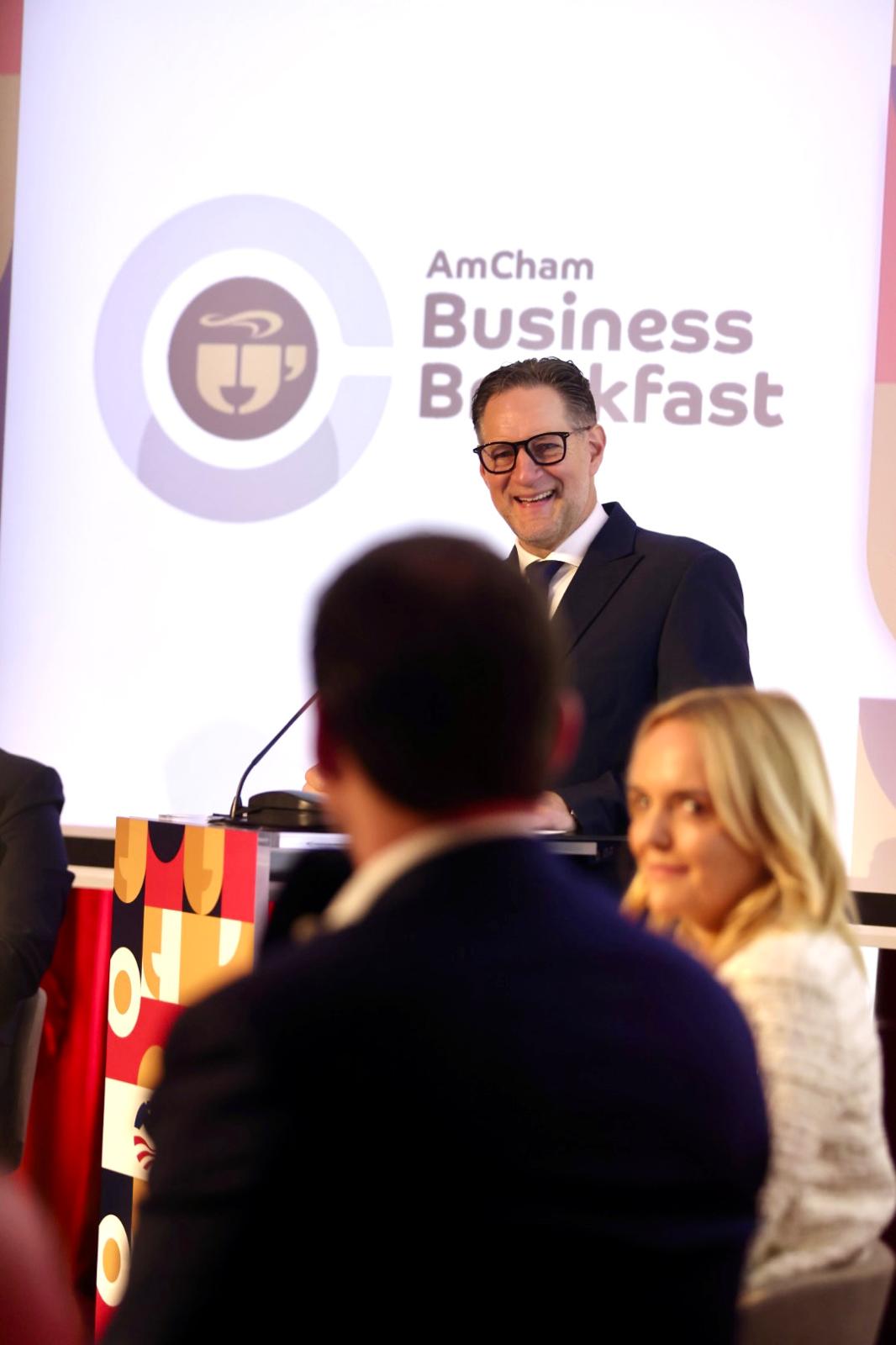
In his opening remarks, AmCham Slovenia President Beno Ceglar emphasized the importance of optimism and partnership in challenging times: “This week, we welcomed new members to AmCham Slovenia. What impressed me most was their optimism – about our community, the business environment, and what we can achieve together. This kind of optimism is not naïve; it delivers results. Yes, we are living in demanding times. The global order is changing, uncertainty is rising, and relationships that have delivered stability and progress for decades are being tested. But this must not distract us from what truly matters. Transatlantic cooperation is not an abstract political idea – it is the world’s largest economic partnership. For businesses, it means scale, innovation, resilience, and above all, trust. And in business, we know this well: value is very easy to destroy, but extremely difficult to build – or rebuild. Strong partnerships are not defined by the absence of disagreement, but by the ability to manage differences without undermining the foundations of cooperation.”
Businesses on Both Sides of the Atlantic Need Facts, Predictability, and Dialogue
At AmCham Slovenia and within AmChams in Europe, announced tariff measures and current tensions are primarily viewed through an economic and fact-based lens, as factors that further increase uncertainty. Such measures have broader consequences, affecting entire supply chains as well as companies in countries connected to impacted markets. Approximately 16 million direct jobs and more than 50 million indirect jobs depend on the transatlantic economy.
Barbara Žibret Kralj, Executive Director and Managing Partner at Deloitte Slovenia, highlighted the tangible impact of politics on business, noting that economic growth indicators are already declining. According to her, cooperation between the United States and some key European economies has decreased significantly over the past year, with direct consequences for Slovenian companies as well.
The importance of a stable business environment was also emphasized by Boštjan Udovič, who pointed out that after several decades, politics is once again taking precedence over the economy: “The main challenge in relations between Slovenia and the United States, and between the European Union and the U.S., is that after 35 years we are once again facing a period in which politics comes before the economy. This creates unpredictability.”
The World’s Strongest Economic Partnership
Speakers stressed that transatlantic economic relations remain deeply interconnected and vital for both Europe and the United States. They continue to represent the world’s strongest economic partnership, with over USD 1.22 trillion in annual goods trade, nearly USD 293 billion in services trade, and exceptionally strong investment ties. More than 60% of foreign direct investment in the U.S. originates from Europe, while over half of U.S. outbound investment flows back into Europe.
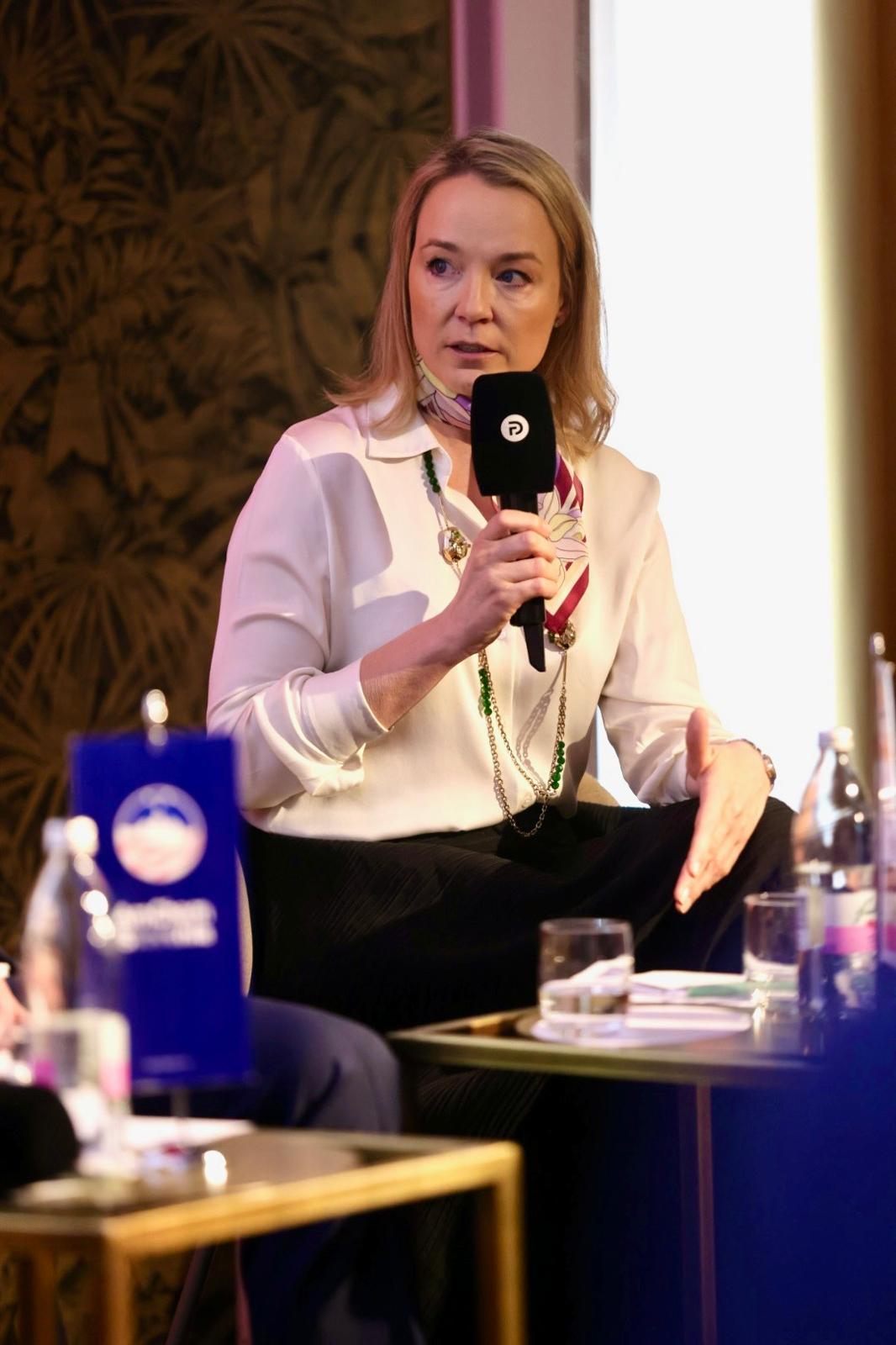
Ajša Vodnik, CEO of AmCham Slovenia and Chair of AmChams in Europe, emphasized that dominance has no place in sustainable business relationships: “When we talk about business, dominance cannot exist, because it ultimately leads to the loss of partnership. … What businesses truly want is more connection, more trust, and more cooperation. Transatlantic partnerships are far too important to be viewed only through numbers – they are about prosperity. Trade is not the only aspect; when discussions focus solely on trade, even when the U.S. President talks about the economy, investment is often overlooked. Business must be vocal, because this is not just about politics – it is about people, companies, and relationships. At the same time, we must acknowledge that Europe – and in some respects Slovenia – is not always predictable either.”
Rules of the Game, Trust, and a Competitive Europe
Addressing the role of Europe and shared values, Miro Cerar, Full Professor and Dean of the Faculty of Law at the University of Ljubljana, emphasized that the European Union must preserve its democratic identity, commitment to the rule of law, and core values, while also recognizing its own strength: “We are not as weak as some would like to portray us. It is true that Europe sometimes faces coordination challenges, but the European Union is strong.”
The Role of Slovenia and Business
Boštjan Udovič, Professor at the Faculty of Social Sciences, University of Ljubljana, also addressed the gap that often characterizes Europe’s – and Slovenia’s – relationship with the United States. He stressed the importance of public diplomacy and distinguishing between America as a society and American politics: “Public diplomacy helps us understand each other better. When we talk about Americans, we are talking about people. When I wrote the chapter, I noted that Slovenians enjoy traveling to the United States, meeting Americans, and building connections with them. At the same time, there is a clear distinction between Americans as people and the state, and between America as a community and American politics.”
Speakers agreed that transatlantic relations in practice are not built by politics alone, but by people, businesses, and communities – through cooperation, entrepreneurship, science, sports, innovation, everyday business connections, and shared historical heritage. These concrete, often less visible ties give the partnership its substance and long-term value.
The importance of these long-standing relationships was also highlighted by Ryan Combs, CEO of the Research Triangle Regional Partnership: “If we look at the history of relations between our countries, we see that our biggest and closest allies are right here in Europe. As an average American, I am not part of political circles, but for me – and for many other Americans – relationships truly matter. That is why it is vital that we maintain them. And I know I am not the only one who is happy to return to Europe whenever possible.”