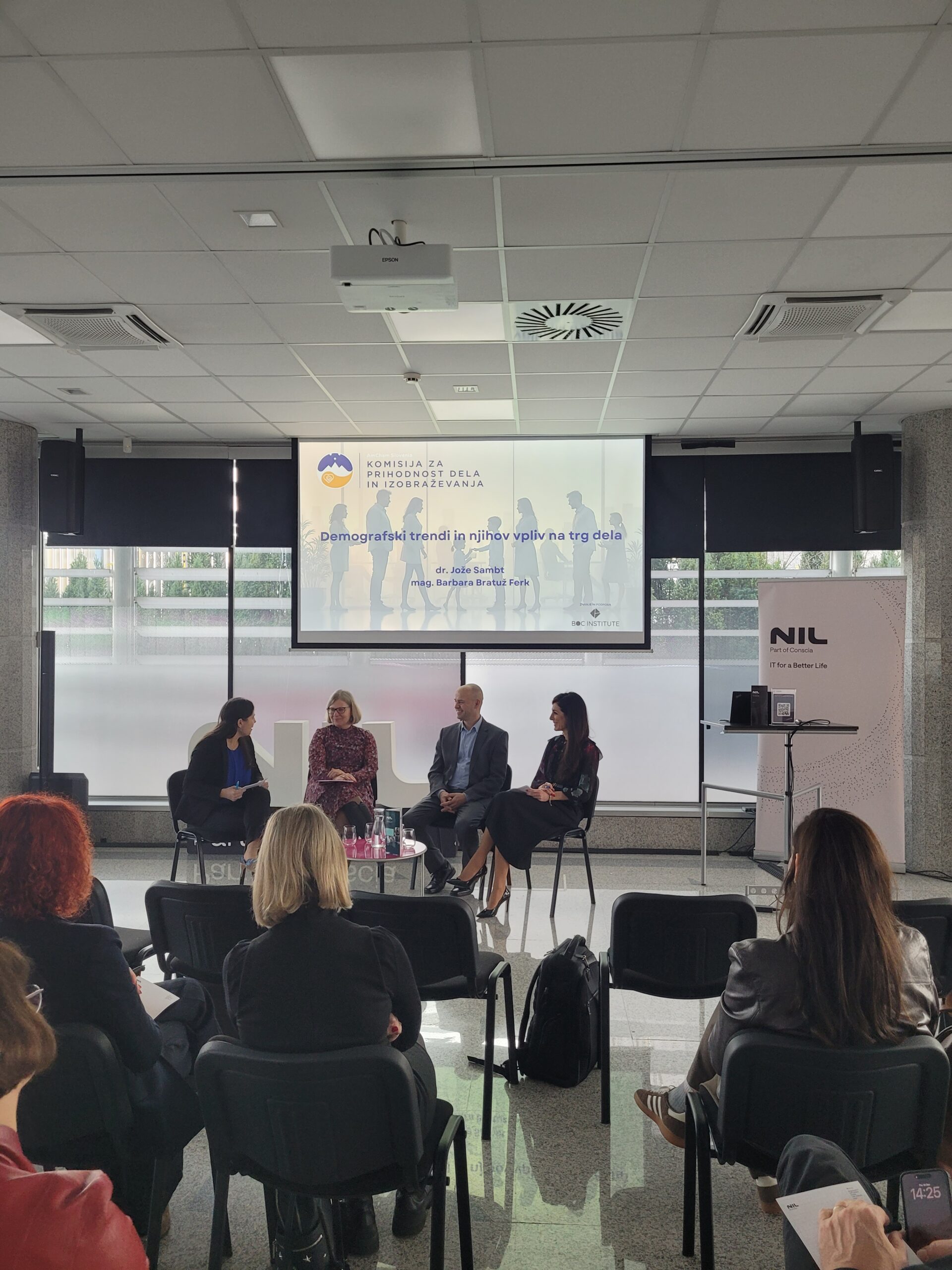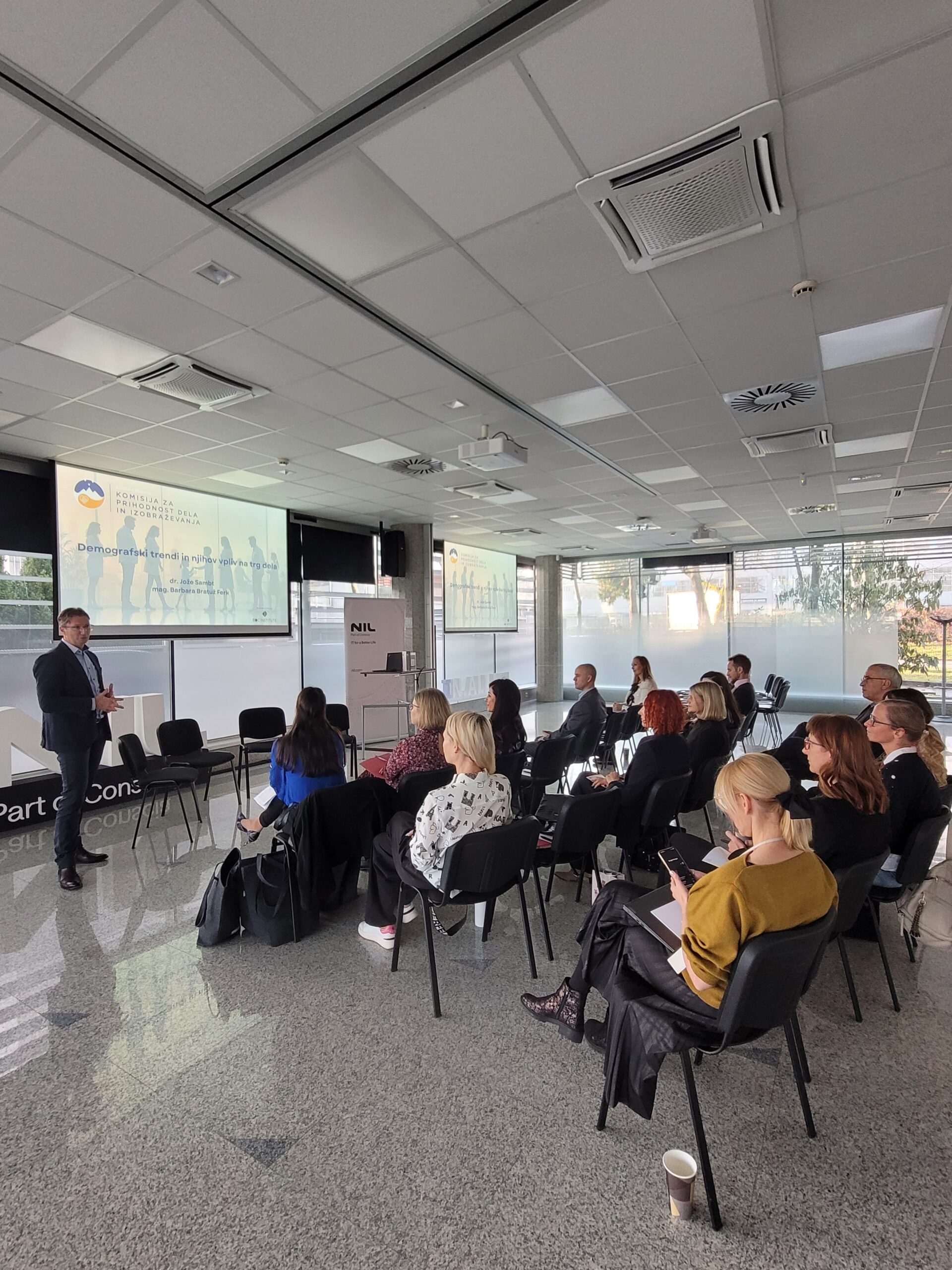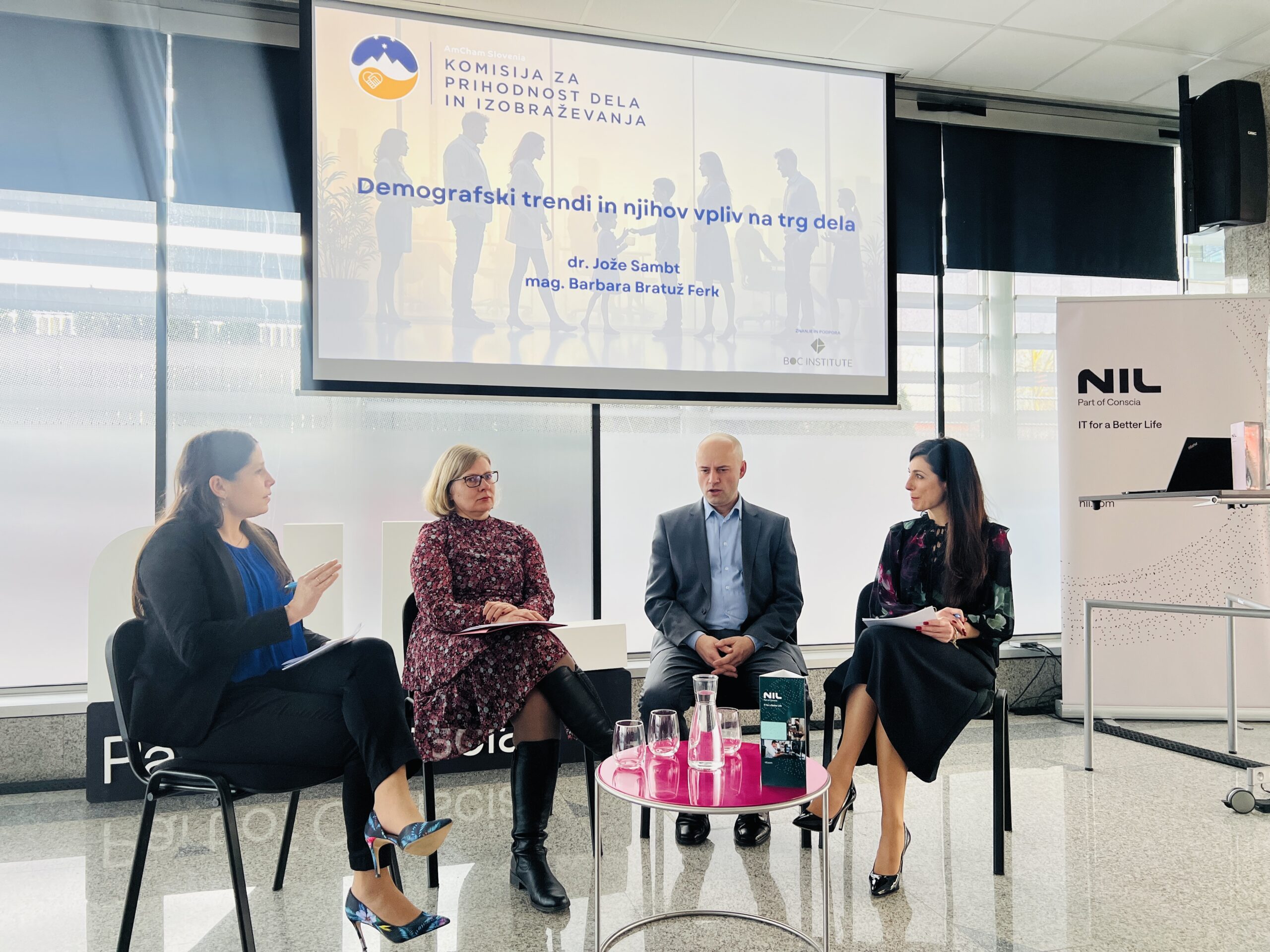


At the December meeting of the Committee for the Future of Work and Education, the discussion focused on demographic trends and the question of how to shape a supportive environment that enables individuals to develop their potential and enjoy a high quality of working life. The meeting featured Prof. Jože Sambt, PhD, from the School of Economics and Business, University of Ljubljana, and Barbara Bratuž Ferk, MSc, from the Institute of Macroeconomic Analysis and Development (IMAD), who presented key data, projections, and challenges already affecting the economy and society.
Slovenia is currently facing the lowest number of births on record. Although the total fertility rate (around 1.5 children per woman) remains relatively high compared to the EU average (1.38), the number of births is declining primarily due to the decreasing number of women of childbearing age. At the same time, the share of women who choose not to have children is increasing—among Generation Z, this share is estimated at around 20%, with environmental and value-based considerations among the key reasons.
The discussion highlighted that demographic challenges cannot be addressed through one-off measures, but rather require a stable and predictable environment. France was highlighted as an example of good practice, as its tax system has long been designed to support families and represents an important element of a consistent, long-term demographic policy.
Special attention was also given to population ageing. Life expectancy is increasing by approximately two years per decade on average, which is undoubtedly positive, but at the same time places growing pressure on the labor market. In Slovenia, there are currently 37 older people per 100 working-age individuals, with the most significant increase expected after 2040, when the large generations born in the early 1980s begin to retire.
In the discussion moderated by the Committee’s Co-Chairs, Vesna Miloševič Zupančič, PhD (e-Študentski servis), and Sanja Savič (S2 Lex), participants emphasized that companies will increasingly need to adapt workplaces to older employees, strengthen intergenerational cooperation, and support longer working lives. Long-term care was identified as one of the key sectors of the future, with rapidly growing demand for skilled workers, while Slovenia currently allocates significantly fewer resources to this area than comparable developed countries.
The meeting clearly demonstrated that demography is not an issue for future generations, but a reality already shaping today’s labor market. The key question remains how to create an environment in which individuals can realize their personal and professional aspirations—without the sense that doing so exposes them to social or economic insecurity.