

February meeting of the AmCham Future of Work and Education Committee
At the February meeting of the AmCham Future of Work and Education Committee, we examined absenteeism from two perspectives – health and demographics.
Sick Leave Has Been Rising Again Since 2014
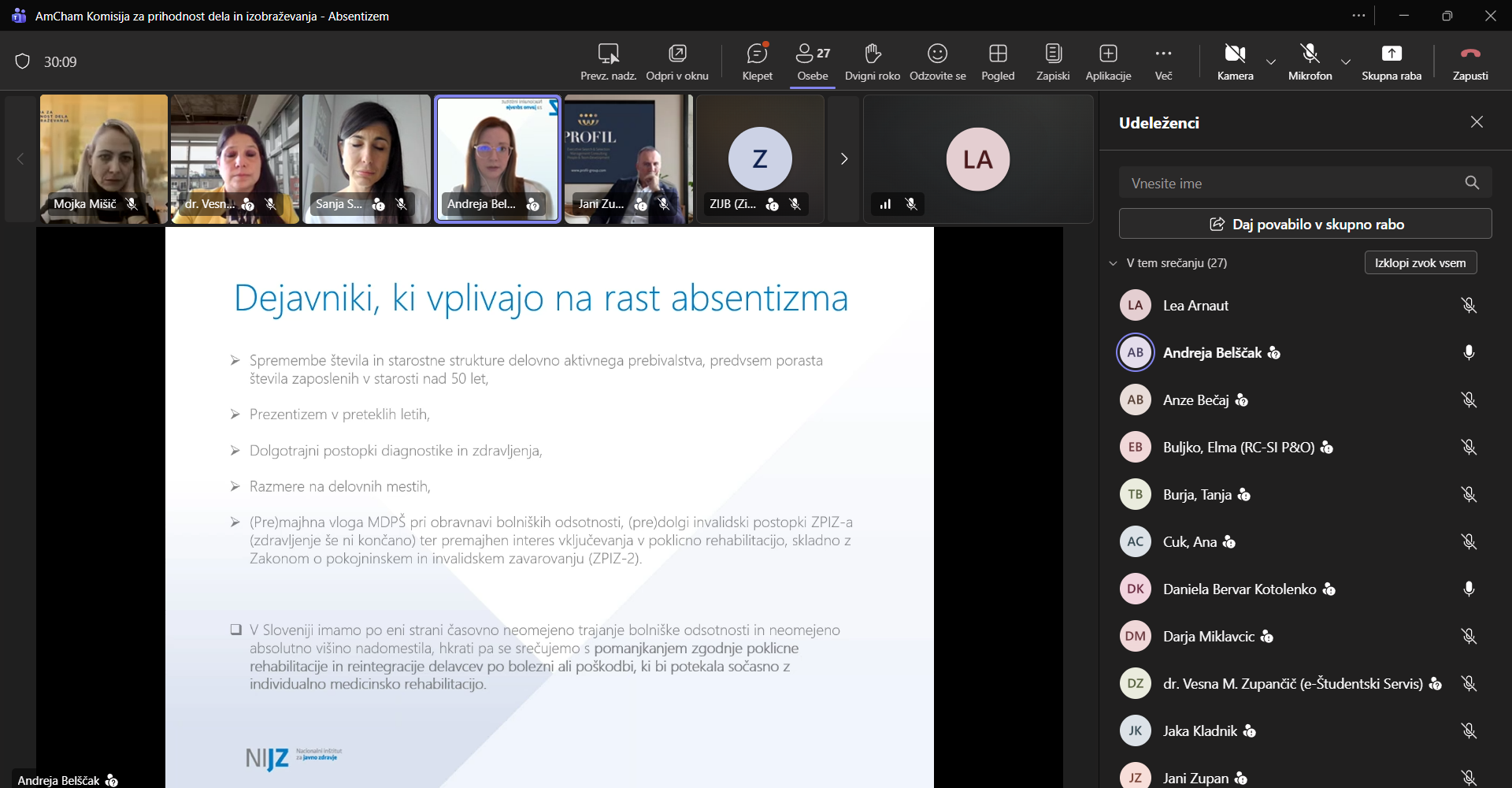
As presented by Andreja Belščak Čolaković (NIJZ), after a period of decline up to 2014, the trend in sick leave has reversed and begun to rise again.
Although 79% of sick leave cases are short-term (up to 7 days), more than 65% of all lost calendar days result from long-term absences (over 30 days). The duration of absence increases significantly with age – among employees aged 65 and over, the average absence lasts 51 days.
The most common reasons for absence remain:
-
diseases of the musculoskeletal system and connective tissue,
-
injuries and poisonings at and outside work,
-
mental and behavioral disorders,
-
infectious and parasitic diseases,
-
respiratory diseases.
Demographics Are Reshaping the Workforce
Martin Bajželj (SURS) placed absenteeism within the broader context of demographic trends that will further tighten labor market conditions.
Slovenia has not been able to naturally replace its population for more than 40 years. The fertility rate of 2.1 – required for stable population replacement – has not been reached since the early 1980s. While in the 1970s around 30,000 children were born annually, today fewer than 17,000 are born each year.
The consequences are already visible. Since 2017, Slovenia has recorded negative natural population growth – approximately 5,000 fewer children are born each year than the number of people who die. The generations entering the labor market are therefore nearly half the size of those leaving it.
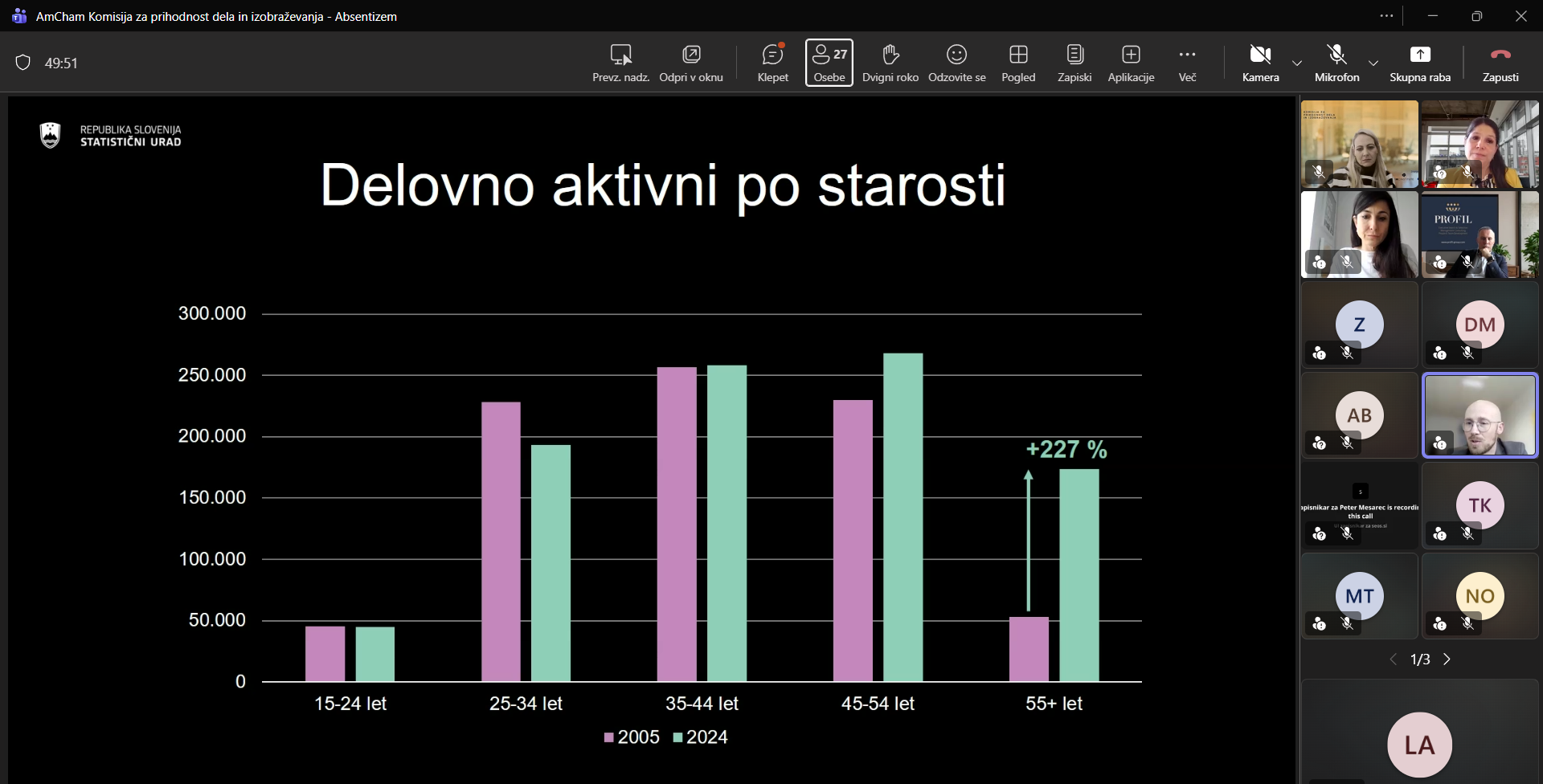
At the same time, the share of the population aged 65 and over continues to increase – rising from 16% in 2008 to 22% today. Over the past 20 years, the number of economically active individuals aged 55 and over has increased by 227%. This age group also reports lower satisfaction with their jobs and poorer self-assessed health status.
During the discussion, long-term measures to encourage higher birth rates were also addressed, with housing affordability mentioned as one of the factors influencing young families’ decisions.
What Does This Mean for Companies?
HR professionals are already experiencing shortages of young talent and increasing difficulty in hiring Slovenians.
Companies should expect:
-
a continued rise in the share of older employees,
-
greater need for workplace adjustments,
-
a stronger focus on health promotion and managing psychosocial risks,
-
more intensive inclusion of foreign labor.
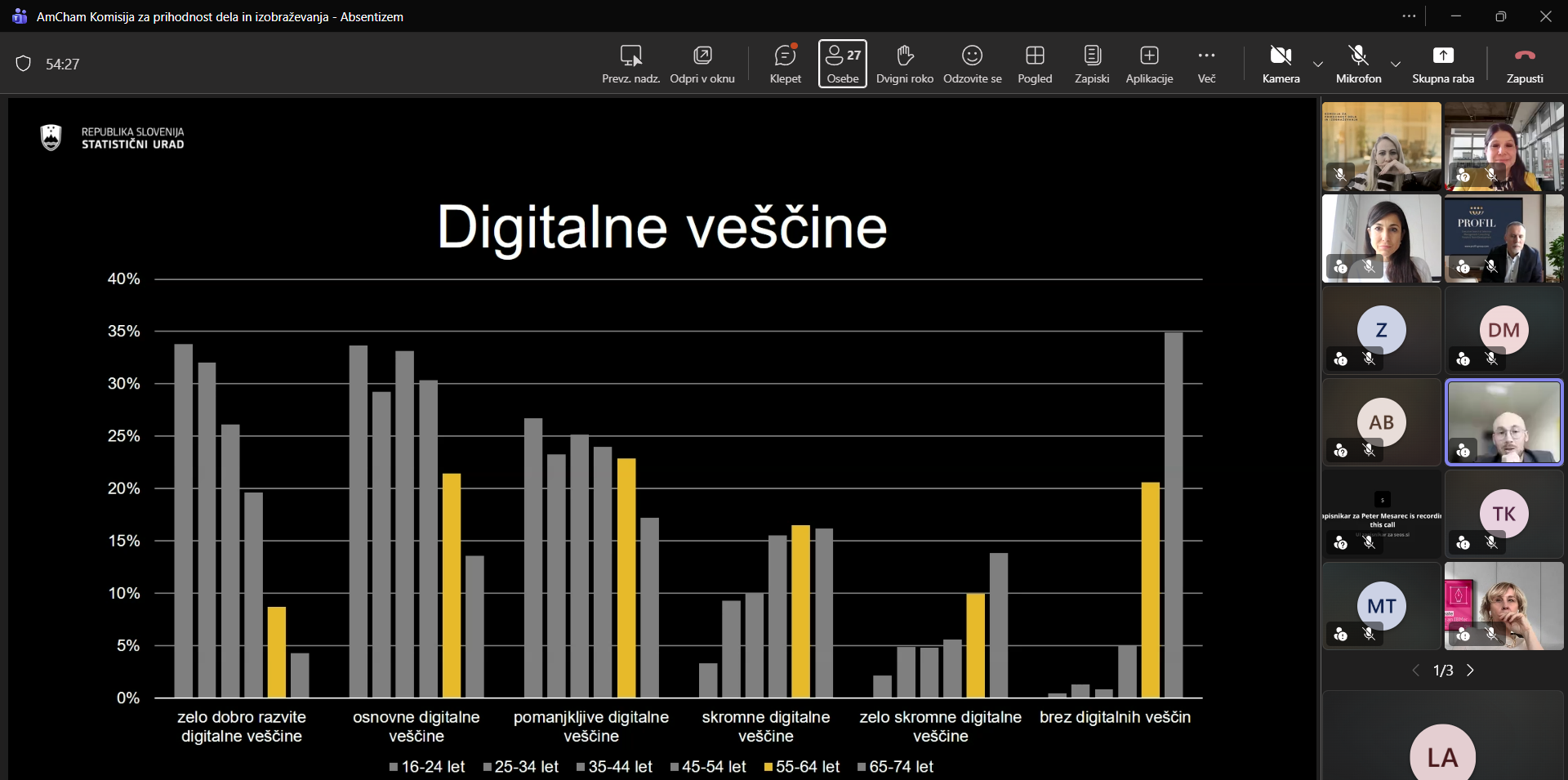
At the same time, data show that Slovenia still has untapped potential in the labor market participation of older workers. With appropriate adjustments, investment in health, and strengthened digital competencies, older employees can remain a vital and stable part of the workforce.