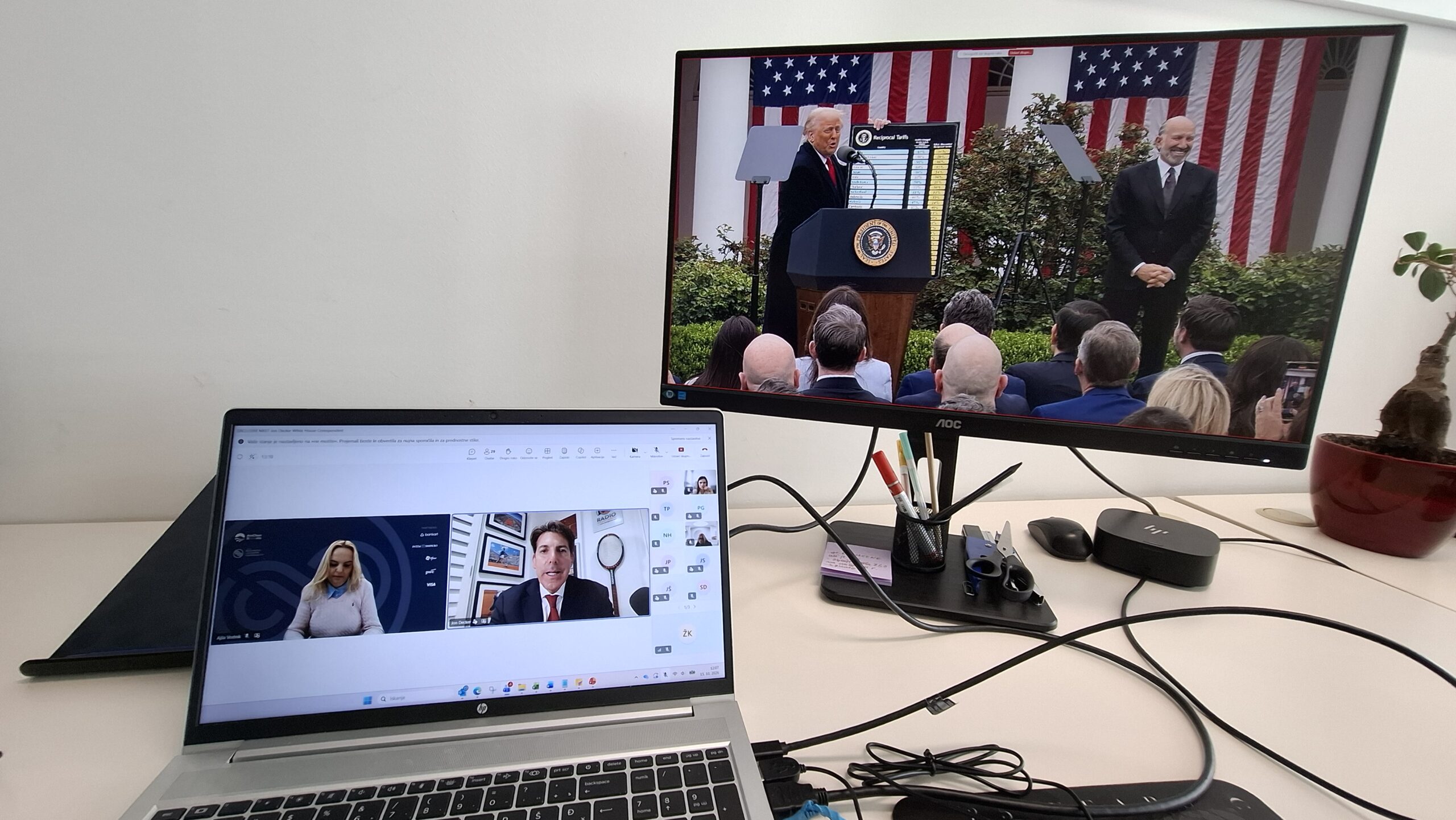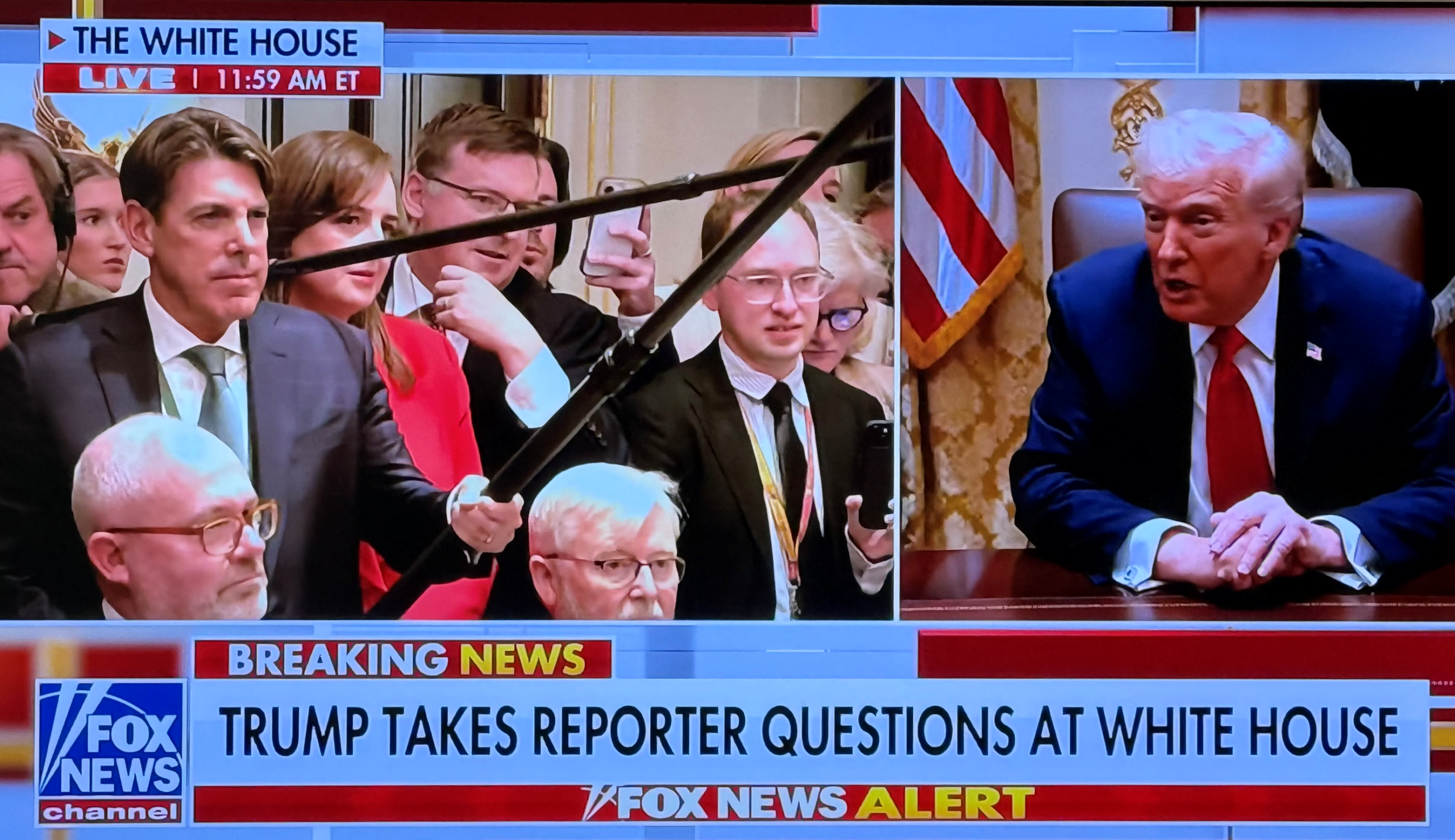


At an exclusive AmCham Slovenia online event, we welcomed Jon Decker, a longtime White House Correspondent, who joined us live from Washington, D.C. to share insights into the current U.S. political landscape, the upcoming midterm elections, and relations between the United States and Europe.
At the heart of the conversation were transatlantic relations, U.S. trade policy, and what the current political developments in Washington mean for Europe. Decker highlighted that transatlantic relations are currently facing challenges, with U.S. tariff policy remaining an important factor.
“Transatlantic relations right now are not in the best place. We know that. And they’ve been in a better place in prior administrations.”
Tariffs remain an important part of President Donald Trump’s agenda and will continue regardless of the outcome of the midterm elections. In this context, Decker also emphasized the importance of direct dialogue with the U.S. administration and the role of NATO Secretary General Mark Rutte in U.S.-European relations.
Another important part of the discussion focused on the U.S. midterm elections and their potential impact on the balance of power in Washington. Jobs, the economy, inflation, energy prices, and the cost of everyday goods remain among the key issues for American voters. Independent voters will also play an important role:
“Independent voters are the voters that decide elections.”
A shift in the balance of power in Congress would significantly change the political dynamics in Washington. Democratic control of at least one chamber of Congress would make it more difficult to pass legislation and increase the importance of presidential executive authority.
The conversation also touched on Ukraine, relations with China, and artificial intelligence. While Ukraine remains an important foreign policy issue, domestic economic concerns continue to be at the forefront for American voters. The U.S.-China relationship remains highly competitive, with artificial intelligence becoming an increasingly important part of that competition and its impact on the economy and jobs gaining greater attention.
The event offered a direct view into the political developments in Washington and the issues shaping transatlantic relations, trade, and economic cooperation between the United States and Europe.